Sunday, March 1, 2015

A visit to Taiwan

This Spring Festival I finally found the chance to pay a visit to Taiwan, China's fabled "treasure island"  (宝岛) of times past. If you want to have a full perspective on China I think it pays to visit this island, 90 miles off the coast of Fujian Province, which for over six decades has offered an alternative version of Chineseness to the one found on the Mainland.

It is amazing now to think that for 22 years, from 1949 until 1971, Taiwan (or rather the "Republic of China") officially represented all of China in the United Nations Security Council. Nowadays the tables are reversed, the PRC is a great power and Taiwan is increasingly marginalized. It is officially recognized as a country by only 21 nations, most of which are small island states few have even heard of. It is forced to compete in international sporting events under the dubious name of "Chinese Taipei", and it sits right next to a huge country which officially considers it to be a renegade province awaiting reunification. What's more, its economy is almost entirely tied to that country. But in spite of all this, Taiwan continues to thrive.

While in Taiwan I visited mainly two places, the current capital Taipei and the old capital Tainan. Taipei is a slick modern city, efficient and interesting. I found I liked it quite a lot. On my first day there I visited the shopping district of Ximendi, which looked a bit like Tokyo and was buzzing with youthfulness and activity. From there I walked on to the imposing presidential palace built by the Japanese, and finally I got to the 228 Peace Park.

This historic park in the center of Taipei now commemorates the victims of the "228 massacre", the violent suppression of anti-government protests by the Guomindang on the 28th of February 1947, in which dozens of thousands were killed. For decades this event was a taboo in Taiwan, much like the events of '89 remain taboo on the Mainland today. After Taiwan democratized, however, it became alright to talk about it, and in 1998 this park was rededicated to the victims of the massacre. Next to the park there is a museum on the incident, but it was unfortunately closed when I went there.

Another place I visited in Taipei was Shilin, the most well known of Taiwan's night markets, which are famous throughout the Chinese-speaking world. These night markets (夜市 in Chinese) are open until late and are dedicated to leisurely eating, shopping and strolling, with the focus definitely on eating. Shilin was crowded, but the snacks on sale were cheap and quite delicious. I went there with a Taiwanese young man who a friend from Beijing had hooked me up with. He brought three friends along, one of whom turned out to live in Beijing as well, and was back in Taiwan for the Spring Festival. They were all extremely nice and friendly, and happy to find out I could speak Mandarin. I asked them if they felt Chinese or not, and their general answer was along the lines of "no, we feel Taiwanese". 

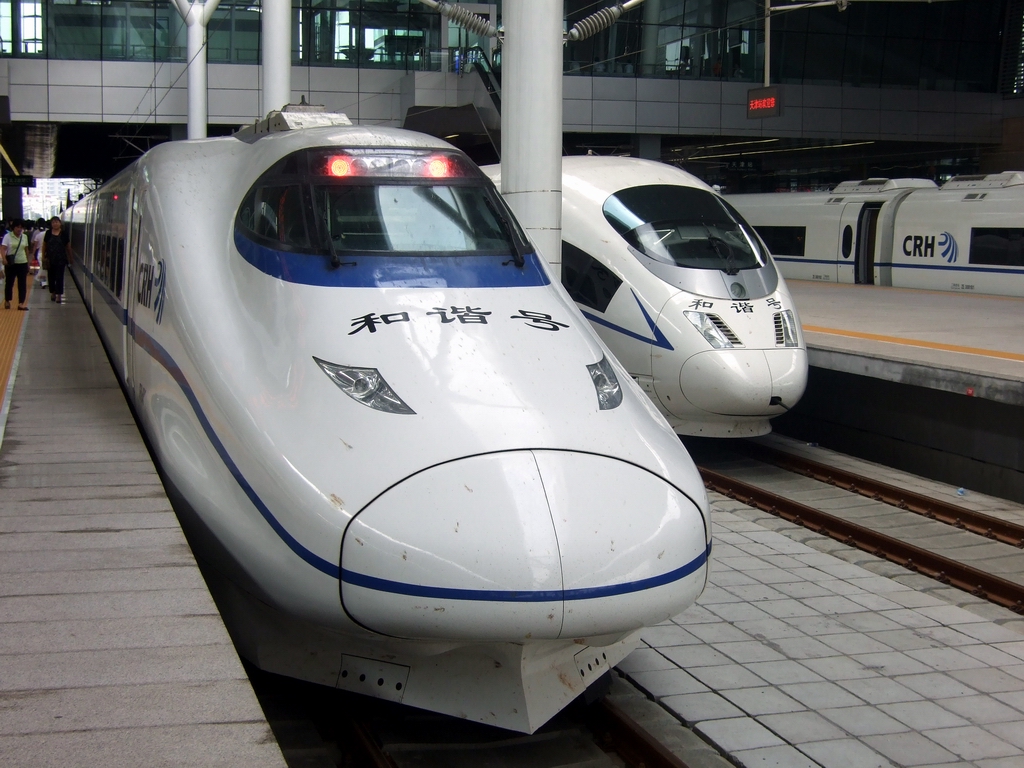
The other big city I visited was Tainan, down in the South. It was Taiwan's old capital during the Qing Dynasty, and it has a cultural heritage second to none. I got there by riding Taiwan's fast and efficient highs-speed railway, which took me from one side of the island to the other in an hour and a half. Tainan turned out to be quite different from Taipei. It felt less modern and developed, and the pace of life is far more laid back. Because of the heat (even in February) and the masses of scooters on the streets, I was somewhat reminded of Vietnam.

In a land of friendly people, the Southern Taiwanese are supposed to be the friendliest of all, and I found this to be true. Quite a few people struck up conversations with me around the city. Although most of the locals speak Taiwanese at home (in other words the variant of Chinese spoken in Fujian province), I found that if I spoke to them in Mandarin I could still understand and be understood. While in Taiwan I also found that getting around in a place which uses the traditional Chinese characters was actually not as hard as I envisaged. Once you have truly mastered the simplified characters, making the switch to the old form of the script is not a big step.

While in the city I went to see the temple in honour of Koxinga, the local hero who liberated Taiwan from Dutch Rule in 1661 and then spent his time resisting the Manchu who had conquered the Mainland. I found out that this hero of both Chinese and Taiwanese nationalism was actually born in Japan and had a Japanese mother. He has been deified in Taiwan, as great historical figures often have been in Chinese culture, and this temple was built in his honour.

I spent the eve of the Chinese New Year in Tainan. Around dinner time the streets filled with the happy banter of families eating their New Year Meal together in their homes. In my hostel I got to know an American who lives in Taiwan, and he took me out to the local night market. Along with us came another American and a local Taiwanese friend of his. As we walked the streets, random strangers would greet us with a 新年快乐 (happy new year). The night market turned out to be absolutely packed, but the food was as good as ever.

Another place I visited before heading back to Taipei was Meishan, a little town in the interior of Taiwan. I got there by bus from Tainan. As the bus rolled through the countryside, I had a strong feeling of being back in the Mainland. The towns and villages really didn't look too distinct from the ones you might find in Southern China.

When I got to Meishan I found the local visitors' centre, where the handful of bored middle aged women who worked there where overwhelmed with enthusiasm when they realized I could speak Chinese ("oh you live in Beijing. That's why you're Mandarin is so standard"). They gave me a map and pointed me in the direction of the local park. When I got there I found it to be quite typical of Chinese parks: there was a little hill which you could climb, at the top of which there was a little pagoda from which you could view the scenery. I climbed up to the top in the company of throngs of local families, and looked at the sub-tropical vegetation which surrounded me on all sides.

Taipei's presidential palace
The scenery at Meishan, in Taiwan's interior.
Taipei's Ximendi shopping district

Although I unfortunately didn't spend very long in Taiwan because of time constraints, I still developed some general impressions of the place.

  • In the end, I would say that what made the best impression on me about Taiwan was the Taiwanese people themselves. Almost all of them are cheerful, easy-going, helpful and friendly, more than the Chinese of the Mainland, and more than anyone else in East Asia for that matter. Other than that, Taiwan seems like an easy and pleasant place to travel: it's small, the weather is nice even in winter (I never needed more than a light jumper even in Taipei), it's relatively cheap, and there are plenty of things to see and do. The only downside I encountered was that Taiwanese hostels are lousy, if my experience is anything to go by. Although staying in youth hostels is a good way to save money and get to know other travellers, if I go back to Taiwan I'm definitely staying only in hotels.   
  • For those who have lived in China a while, Taiwan has a strange feel to it: it feels really familiar, but then it somehow doesn't. It's recognizably Chinese, but without many of the problems and absurdities of China proper. You could almost say that Taiwan is a sort of "China light". The streets can be chaotic, air pollution can be bad and blocks of flats can look ugly and run down, but these problems are still nowhere near as bad as in the Mainland. In general, everything just feels more relaxed and easy to manage. Put it down to a different history, a different system, or even just the fact that it is a tropical island, rather than a huge continent with a billion people jostling for elbow-space. Having said that, in many ways Taiwan feels more similar to the Mainland than Hong Kong does.
  • In Taiwan popular religiosity really is far more widespread than on the Mainland. The most common forms of religious practice seem to be Chinese folk beliefs and Taoism, although Buddhism is also in evidence. As is normal in the Chinese tradition, most people happily dabble in all these belief systems at the same time. Temples are everywhere in Taiwanese cities, and they always seem to be crowded with people lighting incense and chanting (I was there during the Chinese New Year, when temple attendance is probably highest). Although it is untrue that such practices are completely dead on the Mainland, they are certainly much less widespread and harder to find, especially in the urban areas.
  • Before going to Taiwan, I thought of it as an advanced "first-world" economy. When traveling there however, it felt like it was almost at the level of a first-world country, but not quite there, especially once you get out of Taipei. This feeling became even more pronounced when I traveled on to Seoul, which seems more prosperous in comparison. And indeed, if you look at GDP per capita statistics (if you believe in GDP as a good measure of such things), Taiwan is ranked about as high as Portugal or Greece, a bit lower than South Korea and considerably lower than Western Europe or Japan (but still three times higher than the PRC).
  • Taiwan used to be called an "economic miracle", but from what I can see its real miracle is a political one. It is currently the only fully and properly democratic society within the Chinese cultural sphere (including Singapore). In thirty years it has transitioned from being a repressive one-party state under the Guomindang to a genuine democracy with two parties alternating in power, and all the relevant institutions. What's more those institutions were not imposed from the outside like in Hong Kong, but built up locally. And as much as some people like to argue that democracy just doesn't fit in with Chinese culture, the fact is that in Taiwan it basically works fine, in spite of the huge punch-ups which the Taiwanese parliament is famous for.
  • Another thing I didn't realize before going to Taiwan is that it is an extremely overcrowded place. In fact its population density is one of the highest in the world, with 23 million people crowded into a territory only slightly larger than Switzerland. Taking the high speed train down the West Coast, which is the more heavily urbanized side of the island, all I saw was houses and human settlements all the way from Taipei to Tainan. I understand that the mountainous East Coast is less populated and has some amazing natural scenery, and I hope to be able to go there next time and enjoy it.
A parrot in a shop in a Taiwanese village
    People relaxing in a natural hot spring in Beitou, Taipei

Monday, January 26, 2015

A few thoughts on China and the internet

The last few weeks have seen an intensification of the Chinese state's attempts to control which parts of the internet its people should be able to access.

After having blocked nearly all major foreign websites (Facebook, Youtube, Twitter, Gmail, Google...), the authorities are now cracking down on VPNs, the softwares which people use to get around the "great firewall". Over the last month some popular VPNs have been blocked. Anecdotal evidence suggests that all VPNs are becoming increasingly unstable and hard to use. Although I am still managing to use my own one (otherwise I would be unable to access this blog), I have also found that it frequently stops working and needs to be restarted.

I doubt the authorities would go so far as to completely block all VPNs even if they were able to, since that would be a real headache for multinational businesses operating in the country. I must say that a part of me almost hopes they did, since it might finally precipitate a public debate on the issue. In any case,it will now become even harder for the less determined to view censored websites.

This crackdown on VPNs would seem to be part of a more general tightening of the screws on all kinds of dissent which has taken place since the new leadership came to power in 2012. Over the last couple of years, liberal and independent thinkers of all kinds have found themselves increasingly attacked and marginalized.

I think there are some general conclusions to be drawn from all of this. It used to be a common trope that as time goes by and the economy develops, China would "naturally" progress towards being more free and democratic. In my view it is high time to put that old chestnut to rest.

The truth is that a lot of progress was made towards allowing the Chinese greater social freedoms and freedom of expression during the eighties and nineties. Then again, when the baseline was the Maoist years it would have been hard not to improve in these respects. By the start of the 21st century however, China had stabilized at a certain level of freedom (or un-freedom).

While the economy has continued growing at great speed since then, and the infrastructure has continued improving, there has been no great progress in terms of granting citizens genuine freedom of speech and other basic political rights. Further progress would probably necessitate profound reforms of the political system which would ensure a separation of powers and subject the state's actions to constraints and oversight, but the people who run the country are just not willing to undertake such reforms, as much as they may pay lip service to concepts like the "rule of law".

Another thing to realize is that the government still enjoys much support and legitimacy in the eyes of the middle and upper classes of urban China, exactly the people who would have the ability to affect change (the peasant workers who man the country's construction sites may view things differently, but they have little possibility to act upon their feelings). Free thinkers and dissidents like Ai Wei Wei do not represent the mainstream, and never have done.

This holds true for a variety of reasons: partly because of how the state is seen as ensuring economic growth and providing new infrastructure (Beijing has just opened three new subway lines), partly because there is a good degree of social freedom (like the freedom to work where you want, dress how you like and spend your free time how you like), partly because people buy into the line that stability is what matters most and democracy would make China descend into chaos, and partly because they truly believe (or have been convinced) that the current government is what defends the nation from foreign intrusion and restores its honour after the "century of humiliation".

What's more, most of the Chinese public remains only vaguely aware of things like the current crackdown on the internet and on dissent, and has little interest in finding out more. As long this situation continues, the government is on solid ground. This doesn't mean that outside observers have to ignore the obvious negative sides of China's system, or refrain from criticizing these policies. At the same time, there is no use in kidding ourselves: China's internet isn't opening up any time soon. And what's more, most Chinese couldn't really care less.

Saturday, January 24, 2015

Chinese football continues to suck

Last Thursday China got kicked out of the Asian Cup by hosts Australia in the quarter finals, in the most significant match China's national football team had played in years.

China's team is generally quite awful, to the extent that it has become a national joke. It only ever qualified for the World Cup once, in 2002, and then went on to give a downright embarrassing performance, losing all three of its games by 2-0, 4-0 and 3-0. And this was in spite of being managed by Bora Milutinovic, the Serbian trainer who had already worked miracles with other unfancied teams in previous world cups. 

A couple of years ago the Chinese team's awfulness came to the fore again when they lost 5-1 against Thailand in a friendly on their own turf, leading to much whining online about the state of the country's football. In this year's Asian Cup however China seemed to have bucked the trend, winning all three of its first round matches with Uzbekistan, Saudi Arabia and North Korea. This lead to moderate excitement about China's appearance in the quarter finals against Australia. Then last week things went back to normal, with China losing the match 2-0 and heading home with little honour.

I watched the match with two Chinese colleagues in their rundown flat in the north of Beijing. China played a decent first half, then completely came apart after an amazing goal by Tim Cahill, suffering attack upon attack until the hosts inevitably doubled their lead. In the end they thoroughly deserved their defeat against an extremely average football nation. Of course Australia were the hosts, but the Brisbane stadium was so packed with local Chinese that you might have been forgiven for doubting it.

Now there will be renewed debate about why a decent football team cannot be put together out of a nation of 1.4 billion people. It's not as if they haven't tried, with loads of money being spent on importing fancy foreign coaches and players in an effort to raise the level. The sport does not lack popularity either, as you will notice if you go to the sports ground of any Chinese university.  

All the same, Japan and South Korea's teams have been in a completely different league for years. Some blame the pervasive culture of corruption and bribery in Chinese football. Match-fixing scandals are common in China's league. Being familiar with Italy, I don't find this explanation convincing: similar scandals constantly rock the Italian league, but it remains one of the world's great footballing nations. 

As with many other things, it probably comes down to China's system: while the centralized, top-down approach of an authoritarian country works for nurturing gold-medal Olympic gymnasts, it probably doesn't work well for team sports. What's more, a lot of Chinese children would be discouraged from wasting time playing football, and find few places to play it even if they had the time to do so.

Then again, Taiwan's national team (which plays as "Chinese Taipei") is dreadful as well. Perhaps the Chinese and football just don't go together well? Oh well, they still have ping pong.

The Chinese players after a defeat

Thursday, January 8, 2015

A vacation in Italy

I have just returned from a two week vacation in Italy to see my parents. While there I was struck by the decrepit state of some of the Italian infrastructure, particularly when compared to China.

After spending two weeks in the countryside near Rome, two things in particular really made an impression. First of all, mobile phone coverage in the Italian countryside is not terribly widespread. In the house where I stayed, which is located at the top of a little hill in an idyllic rural area, mobile phones simply don't pick up a signal. The same goes for many parts of the surrounding countryside and the nearby village. Driving around, I found that my mobile would only pick up a signal in certain spots. This held true for all Italian providers.

By contrast, in China mobile phone coverage seems to extend to every last hamlet. This may just be my experience, but I have traveled quite a lot in Chinese rural areas, including remote mountainous areas of a relatively poor province like Guizhou, and I have never found that my mobile phone lacked coverage (I use China Mobile). I don't know if this also holds true for the Tibetan plateau, but in most of China mobile phone coverage seems to be universal.

The second thing which struck me is the bad state of many Italian roads. In the area where I was staying, most of the roads seem to be full of bumps and small holes, making any car ride a real strain on the suspensions. Large potholes are unusual, but I did come across a couple of holes which would be big enough to puncture a tire if you drove over them fast. 

Of course in China there are areas where the roads are in an even worse state of disrepair. In fact, some villages still have no paved roads at all. Having said that, I have driven around a lot in Beijing and I can guarantee that the roads throughout Beijing municipality, including its large rural areas, are in quite an excellent state.

Another thing I noticed was how terribly difficult it is to find a parking spot in Rome, something which the locals are always complaining about. In Beijing, on the other hand, I have never had much trouble finding parking in spite of the city's dreadful congestion and traffic jams. I suppose part of the reason must be the underground parking lots which most shopping malls and apartment blocks are equipped with. To be fair, it is hard to build anything underground in Rome without bumping into some Roman remains.

All in all, I got the clear feeling that China's infrastructure has already overtaken Italy's in some respects, at least in the more developed parts of China. Of course Italy still has a much higher GDP per capita than China, and remains a pleasanter place to live for the ordinary citizen. In some ways however it is beginning to feel like more of a "developing country" than China.

Sunday, November 9, 2014

What does it take to clear up Beijing's pollution?

The APEC summit currently taking place in Beijing has provided Beijingers with a week of unusually low pollution and blue skies, due to the exceptional measures which have been taken to ensure that the city would not be blanketed by smog during the summit.

The aforementioned measures have included a five day holiday for all educational institutions and public offices in the city, a suspension of work in all factories and building sites, and only allowing cars to take the road if their number plates end with either odd or even numbers, depending on the day. 
This last measure has been extended to a huge area of Northern China, all the way down to Shandong province. More petty measures have included a ban on burning incense for the deceased in cemeteries, and on taking your own incense into Buddhist temples.

As always, the Chinese authorities will do anything to look good and keep face when they host an international event. It seems to have worked too. In the five days since these measures have been in place, Beijing's skies have been a lovely blue, and the haze which is visible to the naked eye for much of the year (with the exception of when there are strong winds) has completely dissipated. 

According to the US embassy estimates, the ones which savy Beijingers trust the most, PM 2.5 levels have consistently remained below 200, the level which the WHO defines as "very unhealthy" (although today they are over 150, defined as "unhealthy", which in any European city would still be considered unacceptably high).

This shows you what sort of extreme steps currently have to be taken just to ensure a smog-free Beijing for a few days. Unfortunately such measures are not sustainable in the long run, and structural changes will be needed to achieve a long-term improvement. 

In the meantime we can all enjoy the Beijing sky's "APEC blue", as the locals have dubbed it.

The unusually clean air over central Beijing last Thursday.

Tuesday, October 28, 2014

How has China changed since 2004?

That China is undergoing "a dizzying pace of change" has become a worn-out journalistic cliche'. An old Lonely Planet guidebook once put it better: China is a country undergoing massive and rapid change, but still somehow always exactly the same.

The first time I visited China was in 2004. It's now been a decade. China has changed, and so have I. I have decided to list a few of the ways in which China has changed since that first visit of mine, as seen from my perspective.

Trains

Ten years ago, getting around China meant either spending money to fly, or taking 10, 20 or 30 hour train-rides. The options in the trains included a "soft bunk bed", a "hard bunk bed" (not really hard but cramped and with no privacy), a simple seat, and even a "standing ticket" which meant you had to spend the journey standing in the aisle.

Fast forward to 2014, and most Chinese trains are still like that. There is however a growing network of high-speed railways, which is already the most extensive in the world. High speed trains now link pretty much all of China's biggest and richest cities, crisscrossing most of the Eastern coastline. They are seriously fast too: the 1300 Km. tract from Beijing to Shanghai now takes just five hours. Journeys which used to be grueling overnight odysseys can now be done in a few hours, in comfortable new trains where people are not allowed to travel without a seat. The carriages are sometimes even equipped with wi-fi.

Of course many parts of China still aren't reachable in this way, but the high-speed network is scheduled to expand, and quite soon almost all of China's provincial capitals will be covered. Tedious 20 to 30 hour train-rides to get around the country will then become a thing of the past. I think this is one aspect of China's policies which the US should seriously consider imitating, if the car and oil lobbies don't get in the way.


The attention which foreigners gather

When I traveled through China in 2004, the only places where I did not receive too much attention as a foreigner were the centers of Beijing, Shanghai and Nanjing. Everywhere else I went, I would attract surprised stares and cries of "laowai". Young people would stop me on the street and try to speak to me in English, or ask me if they could take a photo with me. This happened to me a lot even when I visited Chongqing, already a huge city with skyscrapers and McDonalds in the center.

I still remember going into an internet cafe' in Suzhou to check my e-mail, and having some youngsters literally crowd round my screen to see what the foreigner was writing. When I visited some smaller towns in the vicinity of Chongqing, people would sometimes stare at me as if they had just seen a ghost, with their mouths wide open and their eyes almost popping out of their sockets (it wasn't everyone, but it happened).

Fast forward ten years, and the amount of attention you draw as a foreigner in China has decreased considerably. In the bigger and more cosmopolitan cities, from Beijing to Qingdao to Shenzhen, it is quite unusual for anyone to give you even a passing glimpse. Chinese and foreigners are treated almost with the same level of indifference. There have just been too many foreign visitors here for too long, and it is no longer a novelty. In smaller or more remote places the sudden appearance of a foreigner can still draw surprised stares and curiosity, but less so than it used to be the case a decade ago.

Then again, it might also be me: in 2004 I had long hair and a ginger beard, which must have made me look much more outlandish. 

Smoking 

When I visited China in 2004, I got the impression that the entire male population smoked. The majority of the men you saw on the streets were smoking. On the other hand you almost never saw ladies lighting up, since it was not considered a feminine thing to do. Smoking was permissible pretty much everywhere. I don't remember any restaurants or cafes where it wasn't possible to smoke. Since I smoked too at the time, I found this quite agreeable. I also remember that packets of cheap local cigarettes only cost 3 Yuan. 

Although smoking is still widespread in China, the proportion of men who smoke has decreased considerably. Especially among the young and educated, it is no longer the norm. In the big cities there are now numerous establishments and restaurants which don't allow smoking on the premises, or confine it to a special smoking area.

On the other hand, you see noticeably more women smoking on the streets than you did a decade ago. I suppose this is an unfortunate off-shot of the weakening of traditional gender roles.


Chinglish

For an English-speaker, one of the funniest aspects of travel in China is coming across the bad translations of Chinese into English which dot the country's cities and tourist sites. They can be bemusing, hilarious, meaningless and even surreal. Often the product of computerized translation, notices and menus mistranslated into English can always provide a good laugh. There are in fact entire books dedicated to collections of the funniest examples.

Unfortunately, the quality of English signage in China's bigger cities has improved considerably over the last decade. Menus can still provide a good laugh (you may order a "Spicy temptation of frog", or even a "Ding Xiang fish with investigate the benefits of chamomile"), but English signs at tourist sites and in offices tend to have much less comedy value then they used to. Whoever deals with such things has clearly zeroed in on the necessity to ask someone competent for advice before just putting up a sentence mechanically translated from Chinese. 

Don't despair though: plenty of funny Chinglish is still out there if you search for it, and restaurants all over China still have the "mind out: knock head" notice above doorways where a tall foreigner might bash their head. I just hope that the brilliant "don't walk on the grass" signs like the one below will always survive.


Sunday, October 5, 2014

Hong Kong and the "hostile foreign forces"

So it seems that the Hong Kong protests may be starting to peter out, without having achieved their goal. This was to be expected; there was no way the government was backing down.

Over the last couple of weeks I have heard various of my foreign friends here in Beijing wonder if the protests were going to end with a repeat of Beijing 1989. This always seemed unlikely to me, as I couldn't imagine the Chinese government sending the army into Hong Kong. Instead, it seems like they may well have chosen the sneakier method of encouraging Hong Kong's triads to attack and harass the demonstrators.

Here in the Mainland, the media has attempted to paint the demonstrators as naive students manipulated by shadowy "外国势力" (foreign forces), which in their imagination are always waiting to pounce on any chance to destabilize China. That they would present it this way is entirely predictable for those who know anything about China. It is also not at all surprising that many Mainland Chinese are ready to be swayed by such accusations.

Allegations of foreign backing are relatively groundless (as this piece by Dave Lindorff intelligently argues). The protesters themselves are genuine Hong Kongers of all ethnic backgrounds, and most of them were not part of any organized movement, but simply turned up spontaneously. The Occupy Central and Scholarism movements are organized, lead and staffed by Hong Kongers. While it is obvious that such a movement would receive sympathy and support in the Western world, there is no real evidence that it was organized or received material support from the outside.

The real mystery is perhaps not whether there are "foreign forces" supporting the protesters, but why this should matter. When the Chinese Communist Party was struggling against the Japanese and the Guomindang in the fourties, were they not receiving the support of "foreign forces"? Or was the Soviet Union not a foreign country? Is receiving international support necessarily a bad thing?

Surely any political movement should be judged on the strength of its goals and its cause, and not on whether it is receiving foreign backing. The Hong Kong protesters demand the right to elect Hong Kong's Chief Executive freely. It is the central government's refusal to allow this that is "destabilizing" Hong Kong. Having a chief executive that doesn't just toe Beijing's line would probably not destabilize Hong Kong, but just improve the level of trust between Hong Kongers and their local leaders. There is no way it could lead to independence for Hong Kong.

Protesters in Hong Kong. The crossed out Chinese word on the placards means "silence" (沉默)

It is interesting to note that Beijing's accusation that Hong Kong's protest movement is basically a pawn of the West ties in with a certain sort of discourse which is gaining much ground internationally. This discourse, which unites the Chinese and Russian governments and their supporters with certain sectors of the Western left, holds that most of the pro-democracy protest movements and rebellions against authoritarian regimes which have erupted around the world in recent years have been initiated and funded by the United States and its allies, in order to destabilize and replace governments unfriendly to them.

According to this line of reasoning the uprisings in Syria and Libya, the Maidan protest movement in Ukraine, the electoral protests in Iran in 2009, the Venezuelan protests against Maduro's government, the unrest in Xinjiang and now the Occupy movement in Hong Kong are all mere tools of the US and the West in their geopolitical struggle against their enemies.

It is of course true that all of the governments targeted by these protests are not on good terms with the United States. It is perfectly reasonable to assume that the US views the protests with sympathy, and even aids them materially in some cases (in the case of Libya, NATO warplanes certainly finished off the protesters' job for them). But to presume that these popular movements are all simple orchestrations of the United States exaggerates the role that this country is able to play and takes away any agency from the protesters themselves, who are reduced to the role of pawns in someone else's game.

The simplistic nature of this analysis is obvious if you look at the "Arab Spring". This wave of popular protest started off targeting dictators friendly to the US and Western interests (Ben Ali in Tunisia and Mubarak in Egypt), and then moved on to countries with regimes long on the list of US enemies (Ghaddafi in Lybia and Assad in Syria). All of these uprisings clearly took inspiration from each other. It would hardly make sense to assume that the rebellions in Syria and Libya were entirely orchestrated by the US, while the ones in Tunisia and Egypt were spontaneous popular uprisings.

Ironically, the way that Russian and Chinese nationalists are always ready to see the hand of the US behind pro-democracy movements around the world reminds me somewhat of how cold war-era conservatives in America and Europe would see the "evil hand" of the Soviet Union behind just struggles everywhere, from blacks fighting apartheid in South Africa to landless peasants fighting for their rights in Latin America.