This Spring Festival I finally found the chance to pay a visit to Taiwan, China's fabled "treasure island" (宝岛) of times past. If you want to have a full perspective on China I think it pays to visit this island, 90 miles off the coast of Fujian
Province, which for over six decades has offered an alternative version of Chineseness to the one found on the Mainland.
It is
amazing now to think that for 22 years, from 1949 until 1971, Taiwan (or
rather the "Republic of China") officially represented all of China in
the United Nations Security Council. Nowadays the tables are reversed,
the PRC is a great power and Taiwan is increasingly marginalized. It is officially recognized as a country by only 21
nations, most of which are small island states few have even heard of.
It is forced to compete in international sporting events under the
dubious name of "Chinese Taipei", and it sits right next to a huge country
which officially considers it to be a renegade province awaiting reunification. What's more, its economy is almost entirely tied to that country. But in spite
of all this, Taiwan continues to thrive.
While in Taiwan I visited mainly two places, the current capital Taipei and the old capital Tainan. Taipei is a slick modern city, efficient and interesting. I found I liked it quite a lot. On my first day there I visited the shopping district of Ximendi, which looked a bit like Tokyo and was buzzing with youthfulness and activity. From there I walked on to the imposing presidential palace built by the Japanese, and finally I got to the 228 Peace Park.
This historic park in the center of Taipei now commemorates
the victims of the "
228 massacre",
the violent suppression of anti-government protests by the
Guomindang on the 28th of February 1947, in which dozens of thousands
were killed. For decades this event
was a taboo in Taiwan, much like the events of '89 remain taboo on the
Mainland today. After Taiwan democratized, however, it became alright to talk
about it, and in 1998 this park was rededicated to the victims of the massacre. Next to the park there is a museum on the incident, but it was unfortunately closed when I went there.
Another place I visited in Taipei was Shilin, the most well known of Taiwan's night markets, which are famous throughout the Chinese-speaking world. These night markets (夜市 in Chinese) are open until late and are dedicated to leisurely eating, shopping and strolling, with the focus definitely on eating. Shilin was crowded, but the snacks on sale were cheap and quite delicious. I went there with a Taiwanese young man who a friend from Beijing
had hooked me up with. He brought three friends along, one of whom turned out to live in Beijing
as well, and was back in Taiwan for the Spring Festival. They were all extremely
nice and friendly, and happy to find out I could speak Mandarin. I asked
them if they felt Chinese or not, and their general answer was along
the lines of "no, we feel Taiwanese".
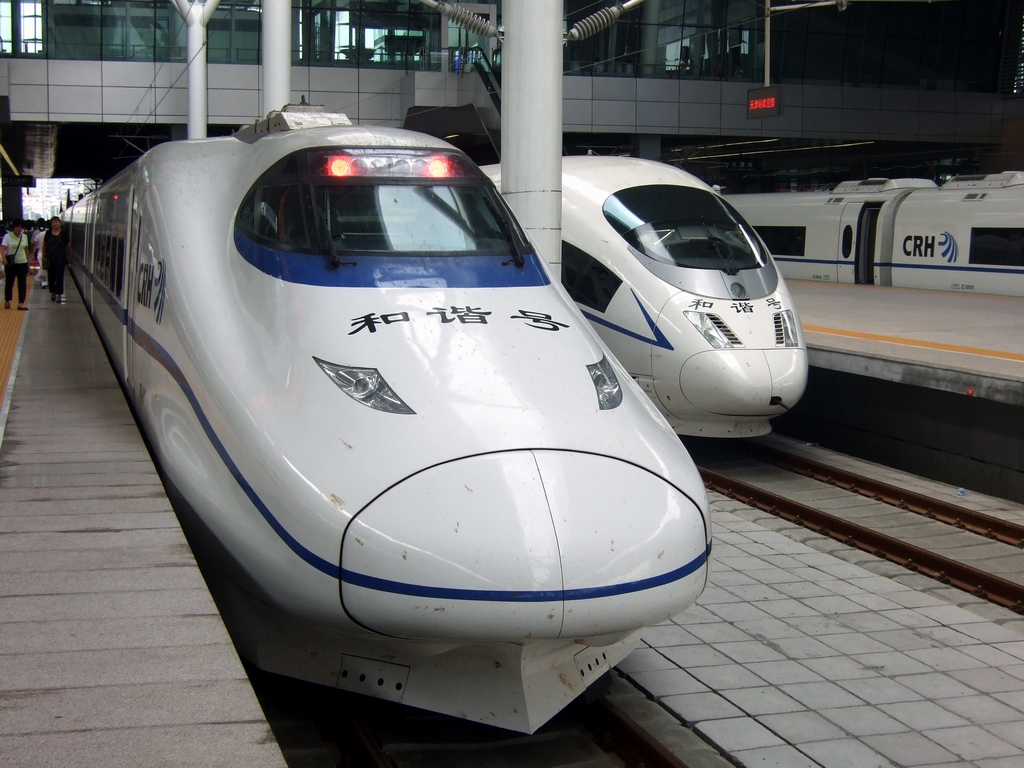
The other big city I visited was Tainan, down in the South. It was Taiwan's old capital during the Qing Dynasty, and it has a cultural heritage second to none. I got there by riding Taiwan's fast and efficient highs-speed railway, which took me from one side of the island to the other in an hour and a half. Tainan turned out to be quite different from Taipei. It felt less
modern and developed, and the pace of life is far more laid back. Because of the
heat (even in February) and the masses of scooters on the streets, I was somewhat
reminded of Vietnam.
In a land of friendly people, the Southern Taiwanese are supposed to
be the friendliest of all, and I found this to be true. Quite a few
people struck up conversations with me around the city. Although most of
the locals speak Taiwanese at home (in other words the variant of
Chinese spoken in Fujian province), I found that if I spoke to them in
Mandarin I could still understand and be understood. While in Taiwan I also found that getting around in a place which uses the traditional Chinese characters was actually not as hard as I envisaged. Once you have truly mastered the simplified characters, making the switch to the old form of the script is not a big step.
While
in the city I went to see the temple in honour of
Koxinga, the local
hero who liberated Taiwan from Dutch Rule in 1661 and then spent his
time resisting the Manchu who had conquered the Mainland. I found out
that this hero of both Chinese and Taiwanese nationalism was actually
born in Japan and had a Japanese mother. He has been deified in Taiwan,
as great historical figures often have been in Chinese culture, and this temple
was built in his honour.
I spent the eve of the Chinese New Year in Tainan. Around
dinner time the streets filled with the happy banter of families eating
their New Year Meal together in their homes. In my hostel I got to know
an American who lives in Taiwan, and he took me out to the local night
market. Along with us came another American and a local Taiwanese friend
of his. As we walked the streets, random strangers would greet us with a
新年快乐 (happy new year). The night market turned out to be absolutely
packed, but the food was as good as ever.
Another place I visited before heading back to Taipei was Meishan, a little town in
the interior of Taiwan. I got there by bus from Tainan. As the bus rolled through the countryside, I had a strong
feeling of being back in the Mainland. The towns and
villages really didn't look too distinct from the ones you might find in
Southern China.
When
I got to Meishan I found the local visitors' centre, where the handful of
bored middle aged women who worked there where overwhelmed with
enthusiasm when they realized I could speak Chinese ("oh you live in Beijing. That's why you're Mandarin is so standard"). They gave me a map
and pointed me in the direction of the local park. When I got there I
found it to be quite typical of Chinese parks: there was a little hill
which you could climb, at the top of which there was a little pagoda
from which you could view the scenery. I climbed up to the top in the
company of throngs of local families, and looked at the sub-tropical
vegetation which surrounded me on all sides.
 |
| Taipei's presidential palace |
 |
| The scenery at Meishan, in Taiwan's interior. |
 |
| Taipei's Ximendi shopping district |
Although I unfortunately didn't spend very long in Taiwan because of
time constraints, I still developed some general impressions of the place.
- In the end, I would say that what made the best impression on me about Taiwan was the Taiwanese people themselves. Almost all of them are cheerful, easy-going, helpful and friendly, more than the Chinese of the Mainland, and more than anyone else in East Asia for that matter. Other than that, Taiwan seems like an easy and pleasant place to travel: it's small, the weather is nice even in winter (I never needed more than a light jumper even in Taipei), it's relatively cheap, and there are plenty of things to see and do. The only downside I encountered was that Taiwanese hostels are lousy, if my experience is anything to go by. Although staying in youth hostels is a good way to save money and get to know other travellers, if I go back to Taiwan I'm definitely staying only in hotels.
- For
those who have lived in China a while, Taiwan has a strange feel to it: it feels really familiar, but then it somehow doesn't. It's recognizably
Chinese, but without many of the problems and absurdities of China proper. You could almost say that Taiwan is a sort of "China light". The streets can be chaotic, air pollution can be bad and blocks of flats can look ugly and run down, but these problems are still nowhere near as bad as in the Mainland. In general, everything just feels more relaxed and easy to manage. Put it down to a different history, a different system, or even just the fact that it is a tropical island, rather than a huge continent with a billion people jostling for elbow-space. Having said that, in many ways Taiwan feels more similar to the Mainland than Hong Kong does.
- In Taiwan popular religiosity really is far more widespread than on the Mainland. The most common forms of religious practice seem to be Chinese folk beliefs and Taoism, although Buddhism is also in evidence. As is normal in the Chinese tradition, most people happily dabble in all these belief systems at the same time. Temples are everywhere in Taiwanese cities, and they always seem to be crowded with people lighting incense and chanting (I was there during the Chinese New Year, when temple attendance is probably highest). Although it is untrue that such practices are completely dead on the Mainland, they are certainly much less widespread and harder to find, especially in the urban areas.
- Before going to Taiwan, I thought of it as an advanced "first-world" economy. When traveling there however, it felt like it was almost at the level of a
first-world country, but not quite there, especially once you get out of
Taipei. This feeling became even more pronounced when I traveled on to Seoul,
which seems more prosperous in comparison. And indeed, if you look at GDP
per capita statistics (if you believe in GDP as a good measure of such
things), Taiwan is ranked about as high as Portugal or Greece, a bit lower than South Korea and considerably lower than Western Europe or Japan (but still three times higher than the PRC).
- Taiwan used to be called an "economic miracle", but from what I can see its real miracle is a political one. It is currently the only fully and properly democratic society within the Chinese cultural sphere (including Singapore). In thirty years it has transitioned from being a repressive one-party state under the Guomindang to a genuine democracy with two parties alternating in power, and all the relevant institutions. What's more those institutions were not imposed from the outside like in Hong Kong, but built up locally. And as much as some people like to argue that democracy just
doesn't fit in with Chinese culture, the fact is that in Taiwan it basically works fine, in spite of the huge punch-ups which the Taiwanese
parliament is famous for.
- Another thing I didn't realize before going to Taiwan is that it is an
extremely overcrowded place. In fact its population density is one of
the highest in
the world, with 23 million people crowded into a territory only slightly
larger than Switzerland. Taking the high speed train down the West
Coast, which is the more heavily urbanized side of the island, all I saw
was houses and human settlements all the way from Taipei to Tainan. I
understand that the mountainous East Coast is less populated and has
some amazing natural scenery, and I hope to be able to go there next
time and enjoy it.
 |
| A parrot in a shop in a Taiwanese village |
 |
| People relaxing in a natural hot spring in Beitou, Taipei |