Saturday, January 6, 2018

Travels in Indonesia: Jakarta, Yogyakarta, Bali


I have just got back from a two-week trip to Indonesia.

Indonesia is probably the most important country in the world that I had yet to visit. This enormous archipelago stretches 5120 kilometers from East to West, longer than the already astonishing distance from Beijing to China's Westernmost point, and longer than the distance from London to Tehran. And while it's population may only be a fifth of China's or India's, that's still an awful lot of people. In fact, Indonesia happens to have the largest Muslim population of any country in the world. And not even all Indonesians are Muslim, far from it.

The fact that the country is spread across a vast number of rugged islands means that it is culturally and linguistically very diverse. Of course, a big chunk of the population is concentrated in crowded Java. But some of the other islands, especially further East, hide small cultures that have developed in almost complete isolation. The most extreme case is West Papua, where much of the population was literally living in the stone age until a few decades ago. But even in other islands across the archipelago, small pockets of hunter-gatherers still survive, and ancient animist rituals still persist in villages whose inhabitants might be classified as Catholics or Protestants on their IDs (Indonesia's citizens have to choose between one of six official faiths for their ID. Well, they are allowed to leave that section blank in theory, but not always in practice).

I started my journey off in Jakarta, Indonesia's sprawling, vibrant capital. Only after going there did I find out that Jakarta's wider metropolitan area is the second largest urban agglomeration in the world after Tokyo-Yokohama, with an incredible 30 million people. Just like many other things about Indonesia, this fact should probably be more widely known than it is. The city is exciting, but also congested and polluted. It is the biggest city in the world that doesn't yet have a subway (although it is now being built), and as you might imagine there is some terrible traffic. On my first day I learnt to get around with the local bus system, which consists of air conditioned buses that travel on special lanes that are physically separated by a barrier from the rest of the traffic, as a result of which they run nice and fast. It was hard to navigate the system without speaking much Indonesian, but the attendants always went out of their way to help me buy tickets and find my stop. This was something I kept coming across in Indonesia: while the country is still quite poor and, just like in much of the tropics, things are not always on time or efficient, the vast majority of the people are extremely friendly and helpful with outsiders.

I visited Kota Tua, the city's old colonial centre built by the Dutch, full of crumbling old buildings that now host museums and cafes. I entered the Museum Wayang, dedicated to the traditional wayang puppets of Java, and then the history museum housed in the building that used to be the Dutch colonial headquarters, the epicentre of the whole colony. The stately building includes a prison in its basement. I then walked on to Glodok, the Chinese quarter further to the South. On the way there I walked down pavements where everything seemed to be going on, from people playing chess and napping to little sweatshops and restaurants doing their business. The street market in Glodok was quite memorable, fulfilling anyone's stereotype of an old Chinese market, with bustling lanes and little shops with red lanterns selling traditional Chinese medicine and other assorted Chinese items. The neighbourhood was the centre of the dreadful anti-Chinese riots that rocked Jakarta in 1998, after Suharto's regime lost power and all of Indonesia's ethnic grievances suddenly exploded into the open, including the resentment against the Chinese-Indonesian minority.

Taman Fatahillah, the square that was the hub of Dutch Indonesia
The street outside my hotel

My own hotel was in Grogol, another area further to the south. It was located next to a huge multi-lane highway, on the other side of which there was a fancy shopping complex and a luxury hotel. Once you walked over the pedestrian bridge that ran over the highway to the side my hotel was on, however, you found yourself in a maze of little alleys where people live in one storey houses with little porches and front yards, and where children play on the streets as their parents chat to each other. The area had the feel of a village in which everyone knows each other. It seemed poor, but not desperately so.

After a couple of days in Jakarta getting my bearings, I decided to take the train to Yogyakarta. 425 kilometres east of the capital, Yogjakarta is located right in the middle of Java. Although it is far smaller than Jakarta, with only 400,000 people in the city proper and about 4 million in the metropolitan area, it is an important cultural and educational centre, and the heart of traditional Javanese culture, arts and language. It is also located close to the ancient Buddhist temple complexes of Borobudur and Prambanan, so tourists use the city as a base to visit these.

The train ride from Jakarta to Yogyakarta took 8 hours. When I got to the station the only tickets left were for the economy class, so the whole trip only cost the equivalent of about 5 euros. The attendant was doubtful that as a foreigner I really wanted to travel in the economy class, but it turned out not to be too bad. Everyone had a seat, and there were no people sitting on the floor or standing as you would find in the cheapest class of a Chinese train. Attendants regularly came round selling drinks and snacks. The biggest problem was that there was not much space between the seats, and I was stuck competing for leg space with a local family.

The long train ride afforded me a good look at Java's landscape. For the first few hours of the ride, the scenery was an endless sprawl of houses and buildings. With 140 million people, Java is the world's most populous island by quite a long shot. The next most populous one would be Honshu, Japan's main island, which only manages 104 million, followed by Britain with 60 million. When you realize that Java only has 2/3 of Britain's size and more than double its population, you appreciate how crowded it actually is. Later into the train ride, as we reached central Java, I did see some pretty spectacular tropical rainforests from the train's window.


After getting to Yogyakarta I checked into my guesthouse, which had its own pool. My room only cost about 13 euros a night, and while not amazing it was decent. Prices in Indonesia are considerably lower than they are in China. I was the only guest in the whole place for two of the three nights I spent there, meaning that I had the whole courtyard with a pool to myself. Not bad at all. I was staying in one of Yogyakarta's two tourist enclaves, and yet there appeared to be relatively few foreign tourists in the area, at least compared to the number of hotels and restaurants obviously catering to them. I was there in the rainy season, which is low season. But I suspect that the recent volcano eruption in Bali might well have affected a lot of people's plans to go to Indonesia, and tourist numbers were down as a result. Staying in hotels with almost no one in them was going to become a constant of my journey through Indonesia.

The next day I visited the Kraton of Yogyakarta. Kraton is the Javanese word for a royal palace. The palace is the seat of the sultanate of Yogyakarta. The unexpected thing is that the sultanate is still active, and the current sultan is the official governor of the city. Yogyakarta is the only place in Indonesia to still be governed by a pre-colonial monarchy. This is the historical result of the strong support that the sultan gave the War of Independence against the Dutch. When the Dutch re-invaded Indonesia after the Second World War and took Jakarta, Yogyakarta became the capital of the Indonesian Republic from 1946 to 1948. After independence, Sukarno thanked the sultan for his support by allowing Yogyakarta to become a special administrative region with the sultan at its head. The current royal family, the Hamengkubuwono, have been in power since 1755, and the current sultan is the tenth in line. He has managed to stay in power even after Indonesia became a democracy in the late nineties, and all other provincial governors started to be elected by popular vote. In 2010, a suggestion by the central government that the sultan should be elected by the people provoked riots by angry Yogyakartans, ready to fight for their right to remain disenfranchised. In 2012 the proposal was shelved for good.

The palace complex was built in 1755, when the current family came to power. The large complex, right in the middle of the city, was meticulously built to reflect the Javanese view of the cosmos, and its every feature is shrouded in symbolic meaning. The palace contains a museum that displays the sultan's artefacts, with unfortunately little in the way of explanations. What I found more interesting than the artefacts themselves was the army of dignified elderly retainers walking around the palace grounds, all barefoot, dressed in traditional garb and carrying daggers for good measure. The palace was also dotted with writing in the traditional Javanese script, that has now been replaced by the Latin alphabet for practical purposes. The Javanese language is spoken or understood by almost 100 million people, making it the world's biggest language to have no official status, since Indonesia's only official language is Indonesian.

Staff at the sultan's palace with traditional garb and daggers, Yogyakarta 


A lot of Indonesian visitors stopped me and asked if they could take a photo with me. This used to happen a lot in Chinese tourist sites: visitors from remote parts of the country asking foreign tourists if they could take a photo together, as if the foreigners were a bigger attraction than the actual attraction. In China this has diminished a lot in the last few years, but in Indonesia it's still commonplace. I always oblige to such requests in China, and I did the same in Indonesia.

Outside of the innermost group of buildings, for which a (cheap) ticket is necessary, there is an area that is still within the outer walls of the palace where about 25000 people live and work. About 1000 are in the pay of the sultan. It is quite interesting to walk around. Unfortunately the whole area is also infested with touts, who will try and strike up a conversation with tourists and then take them to a workshop where they can buy examples of batik, the traditional Javanese dyeing technique. I was accosted by one such tout who took me to a workshop where I ended up buying a traditional Javanese wooden mask, very authentic but no doubt overpriced. To their credit, Indonesian touts tend to be gentle, polite and charming in a way that their counterparts in other countries could really learn from. There is none of the irritating pushiness you could find in countries like India or Egypt, or the brusqueness you might find in China. The country's generally relaxed and gentle behaviour clearly washes off on everyone.

The next day I visited Borobudur, Indonesia's answer to Angkor Wat. Borobudur is a huge stone structure built in the 9th century, considered to be the world's largest Buddhist temple. The temple was abandoned in the 14th century, when Java turned Muslim, and it lay forgotten into 1812, when the British ruler of Java Sir Thomas Stamford Raffles rediscovered the monument. Hotels in Yogyakarta all offer tours to Borobudur (and the other nearby complex of Prambanan, which I did not visit). These tours are all quite expensive, and what's more they all seem to leave at ungodly hours like 4 or 5 in the morning. This is both because watching the sunrise from the top of the temple is supposed to be a magical experience, and because in the middle of the day it can be scorchingly hot and/or pour with rain, so it is advised to get there early. I didn't fancy the idea of waking up so early, I'm not a huge fan of sunrises, and I didn't want to pay that much money, so I resolved to go by public transport. I took a public bus to Borobudur at the much more reasonable time of 9 in the morning, only to discover that the bus stop where I was advised to get off was actually quite a distance from the temple complex itself. I asked a man sitting by the side of the road in my very limited Indonesian how far the temple was, and discovered it was another seven kilometres. I ended up taking a taxi, and was charged an extortionate price which made me wish I had taken the tour after all.

The temple itself was spectacular. It is built in ziggurat fashion, with nine different platforms, the first six square and the last three circular, topped by a central platform with dozens of stone statues of the Buddha in the lotus position. When seen from above, it looks like a gigantic Buddhist mandala. The building is built to represent the three different realms of existence: the base of the building represents Kamadhatu, the world of desires where ordinary sentient beings live. The next five square platforms represent Rupadhatu, the world of forms, where beings go once they have abandoned their earthly desires: they see forms, but are not drawn to them. The top three circular platforms represent Arupadhatu, the formless world, where full Buddhas go beyond all form and perceive world as the formless ocean of Nirvana. Every platform is surrounded by stone reliefs representing that particular level of existence. Sitting on the top platform looking at the surrounding hills was a special experience.

The top platform of the Borobudur temple

Thankfully there were relatively few visitors around, and most of them were Indonesian. More strangers asked to take photos with me. While visiting the museum I got caught in a tropical downpour, and had to take shelter under a tent for about an hour. Once I was out of the temple I managed to identify a bus back to Yogyakarta and get back without mishap. That evening I went out in the Sosrowijayan area, a part of the city that gets lively at night. I ate in a very authentic little restaurant, where the food cost almost nothing and the diners sat on carpets on the floor. Sitting on the floor comes extremely natural to Indonesians, and a lot of street food stalls arrange carpets on the pavement for the customers to sit on while they eat. As a Westerner eating in such a place I drew some attention, and a tourist from the Indonesian Moluccas (the "Spice Islands") sitting at the table next to mine got up to greet me, shake my hand and ask where I was from in passable English. I ordered duck with rice, which turned out to be pretty tasty.

Later that night, back in my guesthouse, I tried to decide where to go next in Indonesia. The country is so huge, with a myriad different islands with different cultures and natural environments, that once you leave Java choices are almost endless. I also had to factor in the time and expense getting to some of the more far flung places would involve. The classical tourist thing to do would have been to fly to Bali, only a short hop further East. But I am not the kind of traveller who wants to stick to the beaten path. In the end I decided to visit one of the islands in Nusa Tenggara, the area consisting of the dozens of islands scattered across the ocean east of Bali and south of Sulawesi. After reading up on the different islands, Timor caught my attention. West Timor, the Indonesian side of the island, sounded fascinating, and was clearly not very often visited. I looked up flights and discovered that getting from Yogyakarta to Timor would invariably involve flying through Bali in any case. I decided that I might as well take a couple of days in Bali to rest and see what the place was like, before heading on to Timor.

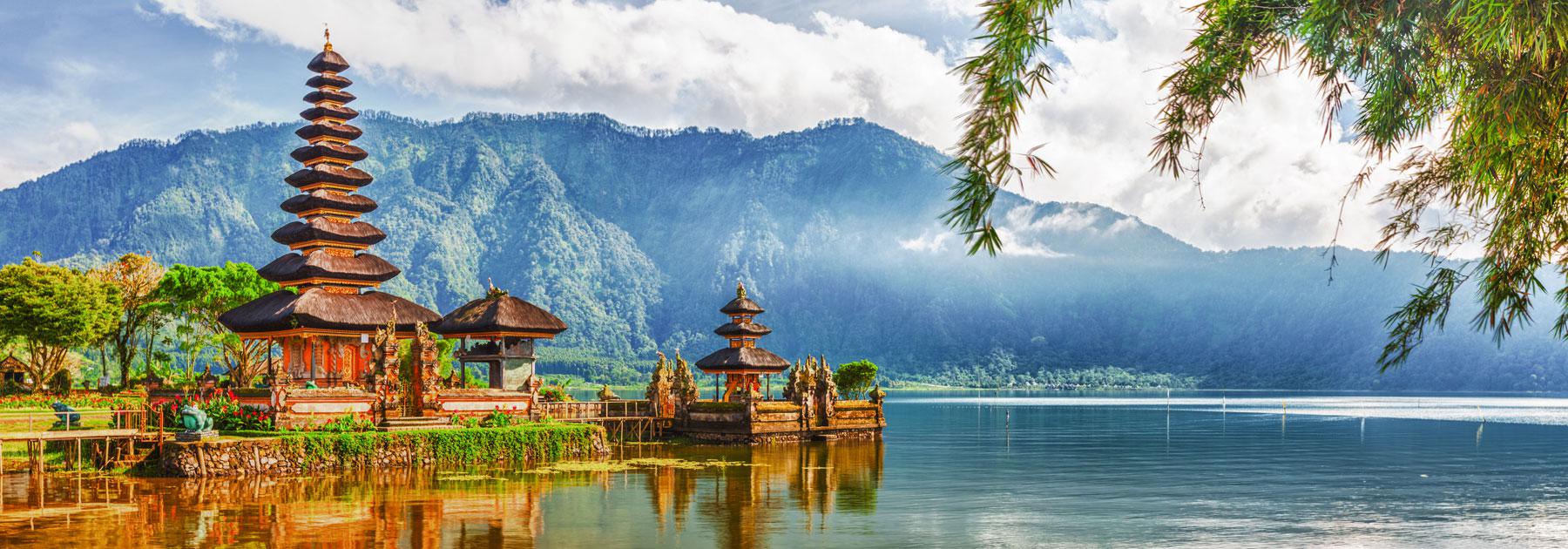
Next afternoon I took a flight to Denpasar, the Balinese capital. Once in Bali I caught a cab to Kuta, the town on Bali's southern tip where most of the tourists are concentrated. The ride only took about twenty minutes. Kuta's streets looked like Ibiza, or any seaside tourist resort around the world. It was extremely overdeveloped, just hotel and restaurant after hotel and restaurant. Tourists from all over the world crowded the streets. I saw lots of Westerners of course, but also quite a lot of honeymooning Indian couples, which apparently represent a big new market for Bali. What seemed to be totally lacking were Chinese visitors. This was apparently because the Chinese government had warned Chinese tourists not to visit Bali due to the volcano eruption. Flights had been grounded in the previous weeks because of the dust from the volcano, but by the time I got there flights were running as usual, and there was no risk at all to being on the island (the volcano is in the north, quite far from the southern strip were most tourists reside).

I had dinner at a stall by the beach where it was possible to pay for the food with WeChat, and the owner spoke a bit of Chinese he had picked up from tourists. He lamented how there had been no Chinese for the past weeks, and how tourist numbers in general were down due to the volcano. I don't know what Bali is normally like, but apart from the lack of Chinese there still seemed to be plenty of tourists, certainly much more than I had seen or would see in the whole rest of Indonesia put together.

Before going to Indonesia, I had heard rave reviews of Bali from people of all kinds. "Simply magical" and "fascinating" were among some of the descriptions. Both Beijing hipsters and taxi drivers in Jakarta had told me that I just had to go there. Bali has had a special hold on the world's imagination for almost a century. Western tourists had already started to travel there in the twenties and thirties, and a number of Western anthropologists and artists who spent time on the island in those days contributed to mythicise it as a mystical land with a unique religious and artistic culture in a pristine setting. The island's culture certainly is unique within Indonesia, as it is the only place in the country where Hinduism is still followed, although what is called Hinduism in Bali has diverged considerably from the beliefs found in India itself. The island now serves as a getaway for people from the East and West alike, all attracted by the promise of a tropical paradise that offers both beaches and culture. Still, I saw no glimpses of the local culture in Kuta. There are certainly many Indonesians there, but I suspect many of them are not Balinese, and all of them work in the tourist industry. Walking down the back streets, I was treated to a constant chorus of "mister, transport" and "mister, massage" ("mister" is how Indonesians normally address foreign men). At night people would call out to me with more raunchy, illegal propositions.

After spending the first night in a dingy backstreet guesthouse, I decided to splurge and relax in a nice hotel on the waterfront for my second night. In the evening I went to drink a beer on the beach and watch the sunset, like all the tourists do. Kuta Beach is where tourism to Bali began. Although the atmosphere was nice, I was amazed to see a trail of plastic rubbish stretching across the beach, at exactly the highest point which the tides had reached. I hadn't seen this on any beach in South East Asia. I got chatting to a Belgian young man who lives in Jakarta. He told me that the trail of rubbish stretched all around the island. He also told me that it is particularly bad during the rainy season (which we were in), when the rivers overflow and carry the rubbish from all over the island out to sea, after which the tides wash it up onto the beaches. He commented that the local government should organize someone to clean it up, or tourist numbers will be affected in the long run. That night I walked along Kuta's bar street (the one where the 2002 bombings occurred), and found it to be more wild and frenetic than any bar street in Soho or Sanlitun.

The trail of rubbish strewn across Kuta beach, Bali

Kuta's bar street

Although staying in Kuta did allow me to relax and recharge for the next leg of the journey, what I saw of Bali certainly didn't seem to justify the hype. I suppose I was just in the wrong place. If I'd had more time, I would have taken a week to travel around Bali and get a better picture of what it is really like. Still, I was not unduly bothered. My next destination was Timor, which promised a lot more excitement.

Thursday, October 19, 2017

Shanghai

Last week I finally visited Shanghai.

Although this may seem surprising for an old China hand like me, I actually hadn't been to Shanghai for years, and was quite unfamiliar with the city. The high-speed trains which travel from Beijing to Shanghai in around five hours at a whopping 300 km/h make the journey relatively convenient and hassle-free, but I still hadn't had the incentive to go down there. This year a friend's relocation to Shanghai finally gave me the excuse I needed to go and take a better look at Mainland China's other metropolis.

This particular friend had been gushing to me for ages about how Shanghai beats Beijing as a place to live in every respect, not just because of the better air, but also in terms of the general quality of life. In his view the city is easier to get around, less congested, more sophisticated and international, has a more law-abiding and civilized society and feels less like a police state.

This is a view of life in Shanghai that I have heard repeated by a lot of other expats in China. People from Shanghai and the surroundings often tell me pretty much the same thing, complaining about the haphazard way in which things are done in Beijing, and the lack of sophistication of the Northern Chinese. Chinese from other parts of China, on the other hand, will often tell you that the Shanghainese look down upon Chinese from other areas and are unfriendly towards them. This is one of those "facts" that everyone in China thinks they know: the Shanghainese despise 外地人 (Chinese from other provinces) and "worship" foreigners and foreign culture. Beijingers do not stand accused of being unfriendly towards other Chinese nearly as much as the Shanghainese do.

After having stayed in Shanghai for four days, I can see where my friend's enthusiasm for the city is coming from. Shanghai is indeed a considerably easier place to live than Beijing, that much is obvious. Part of it is just to do with better urban planning: while the city is also enormous (in fact it has slightly more people than Beijing), the center is less spread out and objectively easier to get around. Traffic is not nearly as bad as it is in Beijing, and if you live somewhere in Pudong (the more residential district on the East side of the river) you can expect to ride a taxi to the French concession, where most of the action takes place at night, in a reasonable amount of time, like 20 or 30 minutes, without encountering dreadful congestion of the kind that makes getting around Beijing such a nightmare at times.

While Shanghai essentially looks like other Chinese cities, everything feels a little cleaner, neater and better organized than it does in Beijing. The difference would probably not be noticeable to a foreign tourist, but to those who live in China it is quite obvious. Even the touristy shopping district of Tianzifang manages to be far nicer and have a better atmosphere than Beijing's equivalent, Nanluoguxiang.

What is also striking is that Shanghai has a much higher proportion of foreign residents than Beijing. You simply see more of them on the streets, and in the French Concession especially the proportion of non-Chinese faces is far higher than what you find in Sanlitun or Gulou. I think the difference would not have been that noticeable say 5 or 10 years ago, but in the meantime there has been quite an exodus of foreigners from Beijing. The pollution has driven a lot of them out, and the increasing hostility towards foreigners on the part of the authorities has worked to drive out a few more.

Not that these problems don't exist in Shanghai. Air pollution is still bad enough, as I could see when I went up to the 92nd floor of the Shanghai World Financial Center and looked out at the horizon across the river like all the tourists do. While the view was impressive, visibility was not clear enough for me to see all the way to the edge of the city. And while the police may not be making a point of raiding expat bars, visa regulations are obviously just as tight as they are elsewhere in the country, and the general system you are dealing with remains the same. As a matter of fact, statistics show that the number of foreigners is dropping in Shanghai too, but it still remains a lot higher than in Beijing (about 250,000, compared to 100,000 for Beijing).

If there is one area where Beijing beats Shanghai, it is probably in the variety and number of interesting people one can meet there. Beijing is China's cultural and political center, and as such it has a lively intellectual scene, both within the Chinese and foreign communities. Foreigners who live in Beijing are more likely to speak Chinese and have a genuine interest in China, while more conventional types would probably not be able to put up with living there (or else work in an embassy). Writers, NGO staff, artists and people in similar lines of work abound. I have a feeling that the social scene in Shanghai would be a lot more shallow, although I have not really been there long enough to experience it for myself. On the other hand, with Beijing getting no easier to live in, and Shanghai remaining China's main window to the outside world, even Beijing's foreign intellectual circles might gradually start to relocate down south.

The view of Shanghai from the top of the World Financial Center

Sunday, September 24, 2017

Five books that will help you understand modern China

Reading books about China can become quite addictive once you get started. There are lots of them, and many are just run of the mill. There are some however that can really give you fresh insight into how this confusing country works. Below are five I would recommend to anyone interested in modern Chinese politics and society.


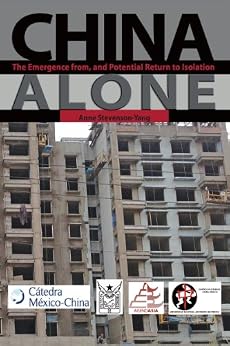
China Alone: the Emergence from and Potential Return to Isolation by Anne-Stevenson Yang

Anne-Stevenson Yang is an American lady who has spent most of her life in China since the mid-eighties, working as a journalist, executive and researcher. She writes about China perceptively and knowledgeably, giving an overview of the political-economy's current woes, from real estate to government debt. She also provides an insightful description of how the country is run, explaining for instance about the networks of "red princelings" that act as intermediaries between the different government departments, in spite of their lack of formal positions in the bureaucracy. Finally she takes a broader view to look at where China is headed. The old model of development has outlived its usefulness, she argues, and China may well be heading back into isolation and insularity. Only real systemic change can break the cycle of opening up to the outside world and then closing down again.


China's Economy: What Everyone Needs to Know by Arthur R. Kroeber

This book provides an excellent overview of all of the salient facts about the Chinese economy in every sector, from agriculture and industry to finance and real estate. Without getting excessively technical or falling into too much detail, it gives the reader a realistic picture of the economy's strengths and weakness, and how they link to the political system. It avoids being too catastrophic, for instance it gives little credit to the idea that China is set for some kind of terrible financial crash due to the real-estate bubble popping or a credit default. At the same time it also avoids the silly triumphalism of certain works about China, arguing that the talk about China becoming a hub of creative innovation is basically hot air, and will remain so as long as the political system doesn't loosen up.

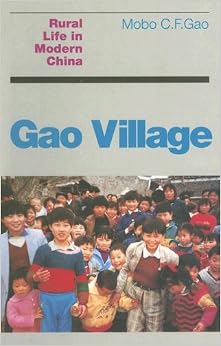
Gao Village: Rural Life in Modern China by Mobo Gao

This book by Mobo Gao is an unusual one, but definitely deserves to be read by anyone interested in China's recent history. It is an account of the history of the author's birthplace, Gao Village in Jiangxi province, since the Communist Party took power in 1949. Mobo Gao was only the second person from this village to gain a higher education in its 200 year history, and ended up becoming a university professor in Australia. His views are controversial, as he is a "leftist" (in Chinese terms) with a tendency to minimise the impact of the disasters of the Mao Era, claiming that they mainly affected the elite, while the peasantry that constituted the overwhelming majority of the population actually benefitted from the era's radical policies, and even from the Cultural Revolution. At the same time, he is disparaging about most current Chinese policies, claiming that they do not really benefit the poor.

While his defence of Mao's rule, which he lays out in his other book "the Battle for China's Past", might seem to be based on a certain selective blindness, this book does a good job of explaining where he is coming from. Enriched with personal memories and anecdotes, but by no means a memoir, the book gives you a vivid picture of this little village and its recent history. He claims that the Great Leap Forward's craziest polices were mitigated by the common sense of the villagers, while the only local culture that was actually lost during the Cultural Revolution was the original copy of the local genealogical tree, which was burnt. He later describes the return of clan-based local struggles, the unjust taxation, the increase in general amorality and insecurity, and the continuing poverty of the villagers during the market reforms of the eighties. He claims that the first real material improvements for the villagers only came in the nineties when the young started to go out and work in the nearby cities, where they were often horribly exploited.

Capitalism with Chinese Characteristics by Huang Yasheng

This book by Huang Yasheng, a Beijinger who teaches at Harvard, offers a different set of insights into how modern China works. Huang is also motivated by concern for the poor and underprivileged, but he sees things very differently from the aforementioned Mobo Gao. Huang is a great fan of the policies followed under Deng Xiaoping in the eighties, which in his view were able to free up the great reservoir of enterpreneurial potential of the Chinese countryside. Peasants were enabled and encouraged to start their own businesses, which they often did quite successfully. After the sad events of 89, however, China changed course. The new model of growth favoured the urban areas, the state-owned enterprises and foreign invested companies, while it was inimical to small indigenous entrepreneurs, and the countryside became nothing but a reserve of cheap labour. While the GDP continued to grow impressively, this form of growth was less beneficial for the well-being of the ordinary Chinese. He calls China's current system "crony capitalism", and calls for genuine protection of property rights to be ensured as a way of checking the system's inherent corruption and cronyism.

You Don't Know China: 22 Enduring Myths by John Ross

China is a country that lends itself uniquely well to myth-making and urban legends. This book is a really good take down of some of the most widespread myths about China, from the mundane (cats and dogs as an everyday dish) to the more consequential (the supposed Dickensian conditions in Chinese factories, China as the new "place to be"). The book does a great job of disposing of some of the new myths about China created by the international media, for instance the huge ghost cities sitting in the desert that on further inspection are not quite as deserted as they seem. Not everyone might agree with some of the authors' points, for instance his complete rubbishing of traditional Chinese medicine, or his contention that China was never really that isolated from foreign influences throughout its history. The inclusion of the Tiananmen Square massacre as a myth, purely because the killings didn't take place within the square itself, strikes me as rather unconvincing. But all in all the book is still a compelling read, and it finishes with a convincing take down of one of the most consequential modern myths about Chinese history, the occurrence of a "century of humiliation".

Thursday, September 21, 2017

Beijing's great bricking up: what lies behind it?

The "great bricking up" of 2017 would seem to be almost over, and the dust is settling again over the hutongs in the center of Beijing. Hundreds, perhaps thousands, of small businesses have been forced to close by having their entrances bricked up (although many have valiantly tried to continue operating through a side entrance or a small window). Corner shops, hairdressers, restaurants and bars, no one has been spared. In the process, some of the city's greatest nightlife spots for foreign hipsters and alternative young locals have been mercilessly destroyed.

Workers brick up the entrance to a hutong restaurant

These are the facts. But what are the motivations behind all of this? The official explanations don't necessarily have much to do with reality. The authorities claim the point of the campaign is to close down illegal hole-in-the-wall businesses, address "architectural violations" and "restore the hutongs to their original look'. This all sounds very reasonable, but I would bet these are not the real motivations. Calling the hutongs' small businesses "illegal" means very little, in a context where property rights are unclear and everything is a grey area.

Most of those in the know seem to think that the point of the campaign is to push the migrants (or in some cases, the foreigners) who operate these businesses out of Beijing, thus reducing the city's population. This is what the Economist claimed in its May article "The Wider Meaning of Change in a Beijing Alleyway", and James Palmer in his Diplomat article, "How to Destroy the Heart of a Chinese City". Some of the smarter analysts who I have spoken to, both foreign and Chinese, make the same claim. In their minds the campaign is linked to the stated policy of capping the capital's population at 23 million by 2020, and moving some of the government functions and a few million people from Beijing to the soon-to-be-constructed city of Xiongan, out in Hebei.

Personally, the idea that the main motivation behind all this closing down of bars and shops in Beijing's central cluster of hutongs is reducing the city's population doesn't strike me as realistic. After all, the vast majority of Beijing's residents don't live or work in the one-storey hutong houses of the center, but in the vast 30-floor tower blocks further in the periphery. A single 小区 (a kind of gated community) in a suburb like Sihui probably contains more people then all of Dongcheng's hutongs put together.

What I suspect is a better explanation for the campaign is one that Palmer's article touches upon: social control. Essentially, the authorities aren't comfortable with the kind of unregulated, spontaneous and cosmopolitan street life that has grown in some of the hutongs in question. Their vision is one of a uniform city where entertainment is provided by air-conditioned shopping malls, and every street just has the same repeated McDonalds, Starbucks and Chinese fast food branches.

If there must be hutongs where people go to have fun, they should be along the model of Nanluoguxiang: essentially horizontal shopping malls, completely commercialized and standardized, replete with a bit of packaged "traditional culture" for out of town Chinese visitors. Incidentally, Nanluoguxiang was also closed down for a few months and renovated last autumn. It's now even more awful than it used to be. Hilariously, this article in the Chinese media claims that it "got a facelift to bring out traditional character". Sadly, touristy towns all over China, from Lijiang to Pingyao, now present shopping streets that look exactly like Nanluoguxiang.

Shops in Nanluoguxiang

It is no accident, I would bet, that some of the hutongs well known as nightlife haunts for young foreigners and Chinese alike, like Fangjia hutong, have been among the hardest hit by the closures. To me they represent the best of Beijing, a place where people from all walks of life (including foreigners and ordinary Chinese) rub shoulders in a genuine traditional setting, and neighbours still know each other. To the decision-makers, they are something that doesn't fit in with their vision of a society "governed by law" with Chinese characteristics. It is also no accident that Sanlitun's famous (or infamous) bar street, which is not in a hutong, has received the same treatment. The dirty, wild and unmanageable bar street is going to be turned into just another extension of the glitzy shopping malls that surround it on both sides. The final result of all this may be to irreparably damage some of the few areas of Beijing that still have some real character and uniqueness to them, in favour of a standardized and soulless entertainment culture that looks the same throughout China.

People eating in front of Moxi Moxi, the now forcibly closed Israeli street food joint in Fangjia hutong 

Monday, September 11, 2017

Why won't China abandon North Korea?

A few years ago I happened to read "Dear Leader" by Jang Jin Sung, one of the best books around about North Korea. Jang Jin Sung is probably the highest-ranking North Korean ever to have defected and told his story in detail. And his story is quite remarkable: he was an ordinary boy from a provincial town who became a writer and got coopted to work in the heart of the regime's propaganda department, creating propaganda aimed at South Koreans. He was lucky enough that one of his poems was praised by the Dear Leader Kim Jong Il himself, and he thus gained the class status of "Admitted" in North Korean parlance. He was then given the honour to meet Kim Jong Il in person, which is what first caused his faith in the system to start wavering. Brought up to believe that his country was governed by an almost god-like figure, when he discovered that Kim Jong Il was actually a very ordinary man who spoke in coarse language and used high heels to mask his short stature, the esteem in which he held his leader took a serious dent.

Although he lived a sheltered life in the capital, when Jang travelled back to his hometown of Sariwon and witnessed the effects of the last gasps of the famine that ravished North Korea in the late nineties, any remaining loyalty to the regime collapsed. While there he saw corpses lying unclaimed outside of the train station, and a farmer publicly executed in the town market for stealing some rice. It disgusted him when undernourished relatives and acquaintances asked him for information about the health and wellbeing of the "selfless Dear Leader" with genuine concern in their voices.

Jang made friends with a colleague who shared his distaste for the system he lived in, and when his friend accidentally mislaid "forbidden" reading material from the propaganda department in the Pyongyang subway, they were both forced to flee the country in 2004. After crossing the border into China and almost getting caught in the process, they were forced to lay low to avoid getting arrested by the police and sent back. Jiang managed to get in contact with South Korean agents who smuggled him into their embassy and give him a diplomatic passport, but his friend was unfortunately caught and committed suicide rather than being sent back.

The book is a compelling read, and its description of North Korea from the inside is fascinating, although by now rather dated. There is however one passage which is very relevant to the contemporary crisis in the Korean peninsula. Jiang Jin-sung recounts a private conversation he once had in Pyongyang with an ex-classmate from Kim-Il Sung University, a government cadre involved in establishing connections with ethnic Koreans in China. Apparently there was then a rule in North Korea that private conversations between cadres could not be used as a basis for prosecution unless there was independent evidence of them having taken place. This rule was made to prevent personal vendettas from spiralling out of control, and it allowed members of the elite to establish friendship and trust by sharing the dangerous truths behind the official narrative.

Jang's ex-classmate spilled his guts out regarding the true state of China-North Korea relations at the time. He told Jang about the background to Kim Jong Il's visit to China in 2001. In 2000 Kim Jong Il apparently came across an internal document of the Chinese government regarding the pact made between China and the DPRK after the Korean War. The document contained statements by some Chinese policy-makers suggesting that China should call off the mutual aid pact, or even ask North Korea for reparations for China's support during the war. Kim Jong Il was furious and went straight to the Chinese embassy to reprimand the ambassador, without any prior warning. North Korea's state news agency also announced the visit to the Chinese embassy without first telling the Chinese. The whole thing was seen as a diplomatic snub to China.

In response, China withdrew its ambassador and sent in a new one who was far less friendly to the North Koreans. A couple of months later, dozens of North Korean agents were arrested in North-East China for trying to groom local cadres within the government and police. Then for a while China even put a stop to aid to North Korea. After making their point, the Chinese authorities invited Kim Jong Il to visit China in January 2001, and he had no choice but to make the trip. The Korean delegation was even made to wait outside Beijing for days before being received. Then Kim was forced to go down to Shanghai and tour the skyscrapers of the Pudong special economic zone, and declare his praise for China's economic reform. This was reported in the international media as a sign that North Korea's leader wanted to emulate China's economic reforms. The reality is that he was forced to go to China as a kind of penance for daring to challenge his Chinese backers.

What is telling are the phrases that Jang's ex-classmate uses when talking about North Korea's relationship with China: "(...) I bet that's the first and last time our general tries to play with China the kind of games he plays with the US. We all know that if they squeeze us, we're dead.". And then later: "If they decide that our regime must go, it will go".

If this was true back in 2004, it is probably even truer now that cross-border trade between North Korea and China is much more large-scale. As others have recently pointed out, it is naive to think that the Chinese government couldn't bring North Korea to its knees if it wanted to. But it is also clear that they do not have any intention of pushing North Korea to the point where its regime may collapse. China's decision-makers may genuinely be frustrated at Kim Jong Un for his recklessness and threats (or they may be secretly pleased), but they appear to think that a reunification of the Korean peninsula would bring US troops all the way to their border. Although the reality is that in the long run the American army would have to pull out of a reunified Korea, the Chinese government probably doesn't believe this or see things that way. While it may not be a puppet, North Korea is essentially a buffer state, and for this reason it continues to exist.

Jang Jin Sung 

Wednesday, August 2, 2017

Is becoming Chinese a goal worth striving for?


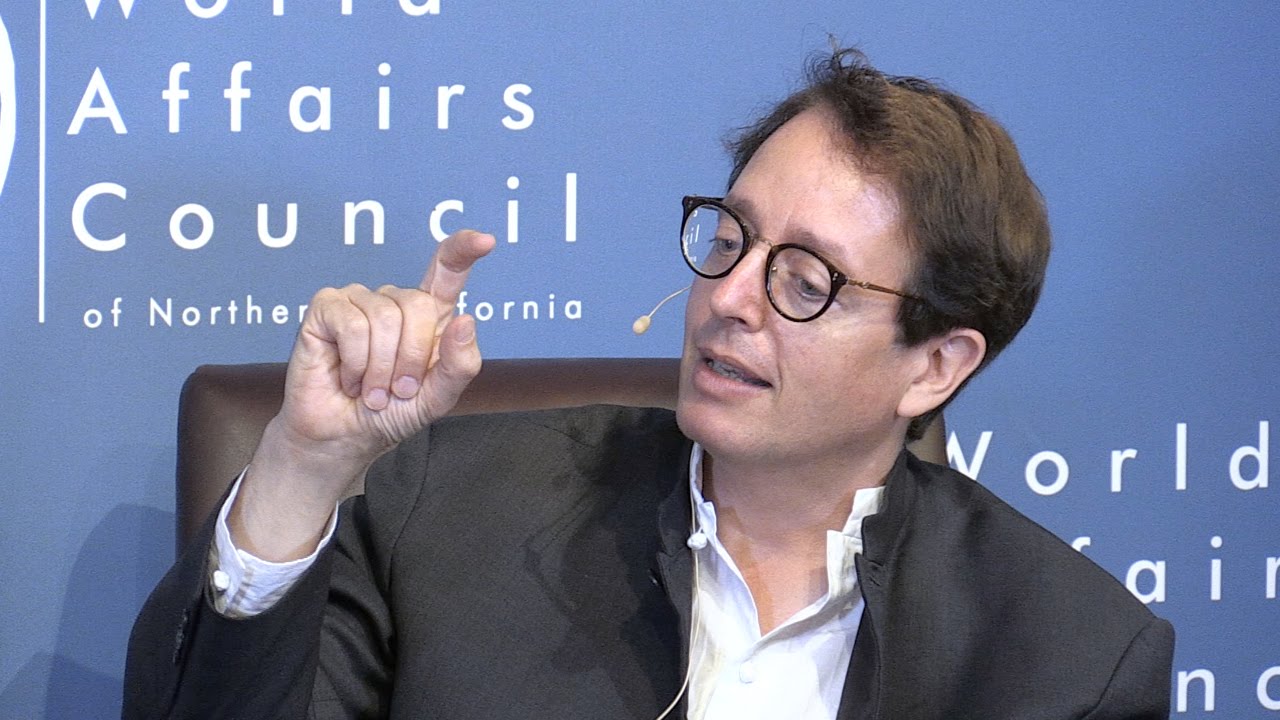
Daniel A. Bell

Daniel A. Bell’s latest piece, “Why anyone can be Chinese”, has certainly raised a few eyebrows. In the article the Canadian professor, who has made a name for himself as a defender of China’s political system, argues that after twenty years in China he would like to be seen as Chinese. This silly reply has already been delivered in the Huffington Post, by someone far too steeped in American identity politics to have anything useful to say on this matter.

Daniel Bell is often dismissed as an apologist for the Chinese government. He is most well known for the contention that China’s political system is actually a “meritocracy” which produces leaders more capable than those elected in democratic systems. I don’t generally agree with his arguments, but I must admit that unlike certain other high-profile Western apologists for the Chinese system (for instance Martin Jacques or John Ross, who can’t speak a word of Chinese between them), he at least puts his money where his mouth is: he has lived in China for over twenty years and speaks fluent Chinese, as well as having a Chinese wife.

Bell argues that Chinese identity wasn't always racially defined throughout history, and that during much of China's ancient past the "dominant elite culture" saw cultural belonging, rather than race or ethnicity, as the bedrock for being Chinese, so outsiders could "learn to be Chinese". This was certainly true during certain periods, for instance the famed Tang Dynasty, when China's only traditional community of Jews established itself in Kaifeng and pretty much became Chinese, in spite of having arrived from abroad. 

Bell complains that nowadays, however, the Chinese view their identity through a racial lens, and in spite of speaking Chinese better than many Chinese, doing his best to fit in and being "committed to Chinese culture", he is still seen as a complete outsider (incidentally, his interest in Confucianism and his penchant for wearing Chinese-style clothing at conferences rather than a suit and tie are actually very un-Chinese characteristics).

Bell is correct that nowadays the Chinese see being one of them as a matter of blood lineage (even though in principle China is supposed to be a multi-ethnic country made up 56 ethnic groups, including a few thousand ethnic Russians in the North who may well look like me. But I think that for the average Han Chinese this is nothing but a detail they rarely think about). As a foreigner living in China I understand where Bell is coming from, but I think that perhaps arguing about whether a foreigner can ever be seen as Chinese is missing the point.

I personally do not feel Chinese, and have no particular wish to be seen by others as Chinese. I also think it is probably pointless to hope China will ever approach North American norms on this issue. In societies historically based on immigration, like the US, Canada, Australia or Brazil, foreign immigrants can reach a point where they feel they belong and are truly accepted by locals as their compatriots. In the rest of the world however this goal is generally unattainable, because national identity (as opposed to mere citizenship) is seen as something that you need to be born into. Even in European countries where a foreign immigrant may acquire citizenship and be treated by the authorities in all respects like a local, deep down they will still be viewed by most people as a foreigner. Asian societies tend to be even more closed, and "becoming" Korean, Vietnamese or Mongolian is likely no more possible than becoming Chinese. 

While fighting to be seen as Chinese is probably pointless, I think a more modest goal foreigners in China could aim for is to change the Chinese perception of what it means to be an outsider. It is one thing to be considered a foreigner, with a different culture and sense of identity. It is another thing for people to automatically assume that as a foreigner you 1) know nothing about China, or in any case cannot ever scratch below the surface, 2) are always going to be a transient "guest" with one foot back in your own country who can never really hold a stake in Chinese society, and 3) are always some sort of ambassador for your own country and its interests, rather than just an individual trying to get by in a new society. 

Not all of these assumptions hold for every single Chinese, but I would say that Chinese society as a whole views outsiders pretty much like that. Foreigners in China who develop close personal relationships with Chinese people will find that their local friends come to view them quite differently, but to most strangers they will still be the archetypal foreigner.

Connected with this change in attitudes would be policies that make it easier for foreigners to live and work in China, acquire permanent residency rights and, who knows, one day even citizenship (without this meaning that you have to "become Chinese" in your own mind and other people's, speak flawless Chinese or be an expert on Confucianism or Beijing opera). Bell's article calls for China to start competing for human talent worldwide, and provides a link to an article by Yan Xuetong, Tsinghua's foreign policy theorist, which claims that China should adopt a more open immigration policy that would "expand its economy while improving its moral standing globally". I fear this is one of those good suggestions that will never be acted upon. The Chinese government currently seems to be in no mood to make China a more open society, and as long as it controls public debate the way it does, I think neither attitudes towards foreigners nor immigration policies are going to change very much.

Saturday, July 15, 2017

Is it too easy for foreign students to get into Chinese universities?

Peking University's famous Weiming Lake

Recently a string of articles have appeared in Chinese social media, lamenting the fact that it is too easy for international students to gain access to Chinese universities compared to what it takes for local students. This may have been precipitated by a change to the regulations of some Chinese universities, including Tsinghua, which appear to have made it even easier for foreign citizens to apply.

It is certainly true that it is far easier for foreign students to gain access to Chinese universities than it is for their local counterparts. China's 高考 exams are notoriously hellish, and competition is cutthroat. By comparison, although things change according to the university and the case, very often a foreign student only needs to apply to get into a Chinese university, sometimes with a Chinese government scholarship to boot. For postgraduate courses, an undergraduate degree in a relevant subject may be required. Then again, sometimes even a degree in an unrelated subject will do.

Most international students who want to study in China do face one serious obstacle: they need to pass an HSK language exam to qualify for degrees taught in the Chinese language. Although some Chinese universities now offer special postgraduate degree programs taught in English, the majority of foreign students apply for degrees taught in Chinese, since they see learning Chinese as half the point of studying in China.

The fact that many foreign students need to pass a difficult language exam to study in China is not necessarily mentioned in these online diatribes. When it is, people lament that the policy favours foreign students with a Chinese background, who are already familiar with the Chinese language. Resentment of kids from rich Chinese families who have acquired foreign passports through various means and can thus apply to top Chinese universities as foreign nationals is often what lies behind these grumblings. As someone commented online, "years of strenuous study aren't worth as much as a foreign passport for getting into a Chinese university".

Other articles, like this one written by a university professor, lament the fact that the foreign students who come to China are not as "high-quality" as the ones studying in America, and not even as good as the local students. There is probably a certain closed-mindedness behind these assessments (the foreign students' mathematical skills aren't as good as the Chinese students' ones, while their critical thinking skills are not being considered), and hearing Chinese complain that the foreigners who come to their country are "poor-quality" is sadly a common refrain in all fields.

It is certainly true that Chinese universities are unable to attract the children of the global elite and the world's most brilliant students the way American or British ones can. In most developing countries, studying in China is a second choice for people who do not have the means to get a degree from a Western country. Students from the West who get degrees in China usually do so because they are curious to experience life in China for a few years, because they want to learn Chinese or because their field of study is related to China. But it is understood that the most brilliant students are not all clamouring to come to China, even to the top universities like Tsinghua and Beida.

The fact remains that if the Chinese want to attract the best international students from around the world, then they have to work on improving their universities. My prediction is that as long as China's political system doesn't fundamentally change, China's top universities will not be able to compete with the best global ones in terms of ground-breaking research and creating a lively intellectual atmosphere, no matter how many funds the government pours into them.

This is not to deny that the best universities in Beijing and Shanghai are actually quite good, with competent professors and students who regularly produce research published in top international journals. But the intellectual atmosphere remains stifling. The recently announced new rules for international students won't help matters. It is also noticeable that if you look at China's Oxford and Cambridge, Tsinghua and Beida (Peking University), the foreign students are intentionally being concentrated in Tsinghua, which focuses more on science and engineering, rather than in Beida, which focuses more on the social sciences. I think it isn't hard to see why.

For Chinese universities, accepting lots of foreign students is also a way of ensuring that they can climb up in the international rankings. Most such rankings include "internationalization" as one of the factors universities are assessed upon, something which also harms the notoriously insular Japanese institutions of higher learning. Having a high proportion of foreign students and staff gets you a higher ranking, and given that the Chinese government is obsessed with China's image and with world rankings of any kind, I find it quite probable that they are handing out scholarships to foreign students simply as a way to help Tsinghua and other universities climb up in the ranks.

Much of what lies behind these complaints about foreign students getting into local universities too easily is a misplaced frustration over problems that are entirely internal and homegrown. The article I linked above starts off with the statement that Peking University enrols 200 South Korean undergraduates every year, and only 100 from the whole of Shandong province. In China this is an incendiary matter. Students from Shandong, an overcrowded province, notoriously have to go through hellish competition to get into a good university in Beijing, literally winning out over millions of competitors. Youngsters from Beijing or Shanghai can get in far more easily, something which causes much resentment. Would this state of affairs change if the university took in less South Koreans or other foreign students? Of course not.

If nothing else, such grumblings will pretty certainly have no effect whatsoever on the policies of Chinese universities and the educational authorities, who will continue to enrol international students to the extent that they feel is useful to their goals.