Thursday, June 17, 2021

If a low birth rate is China's problem, why isn't foreign immigration the solution?

So China's two-child policy is now officially a three-child policy. This development will have come as no surprise to anyone who follows Chinese politics. It's been obvious for years that the Party-State now feels its people are having too few children, not too many. 

One thing this decision makes clear is that the Chinese state simply cannot imagine giving up on its family planning policies altogether and legalising all births, including those outside of marriage. Children have to be born to a heterosexual married couple, and there has to be a limit on the number of children per couple, even when the limit is so high as to be academic in most cases. I suppose that, as well as promoting conventional lifestyles that are good for "social stability", this ensures the countless people who work for the family planning departments across the country will keep their jobs. 

In any case, this new policy is going to mean very little in practice, because the average Chinese family simply isn't interested in having more than two children. In fact, in middle class environments, many couples don't want more than one. When asked why, they will usually claim that having a child is simply "too expensive". This is, in my view, mostly because of the kind of stresses and expectations that the system places on parents and that they place on themselves with regards to their children's education. 

Policymakers are not unaware of this. The Politburo meeting in which the shift was announced also promised supportive measures to address the structural issues that are preventing couples from having more children, including "improving prenatal and postnatal care services, developing a universal childcare service system, reducing family spending on education, strengthening tax and housing support, and safeguarding the lawful rights and interests of working women", as the Xinhua report puts it. 

This all sounds sensible, but most experts agree that it won't be easy to change the basic trends. China's fertility rate stood at just 1.3 children per woman in 2020, which is as low as countries like Japan and Italy. In previous years fertility rates weren't much higher. Few believe they will start growing again. 

A Mao-era poster, saying more or less "if you want the countryside to prosper, have more children who can plant trees". 
 

I happen to think that in the long run lower fertility rates carry real advantages, particularly for an overcrowded country like China, where a lower population will put less pressure on the environment and allow for a better quality of life. But this does not cancel out the fact that an ageing society will lead to real economic and social problems for at least a generation, and doubtlessly cause the leadership to worry about China failing to overtake the US.

European countries with low birth rates have basically addressed the issue through immigration. This has allowed them to replenish their workforce by absorbing newcomers, rather than trying to drive up their own birth rates and contribute to environmentally-deleterious global population growth. Foreign immigrants currently make up 9.4% of the EU's population, and immigrants from outside the EU make up 6.3%. 

Prosperous and ageing East Asian countries are also turning to the same solution, albeit it to a lesser degree. Japan may have a reputation for being monocultural and unwelcoming to outsiders, but it has in fact begun to open its doors to foreign immigration. The number of long-term foreign residents in Japan was 2.23 million, or 1.75% of the population, in 2015. Admittedly some of those are Japanese Brazilians, or Zainichi Koreans, but most are recent immigrants from other Asian countries with no prior links to Japan.

South Korea has gone even further down this path than Japan, with between 2 and 5% of the population made up of foreign immigrants, depending on whose figures you believe. In Taiwan foreign residents make up around 3% of the population, mostly blue-collar workers from South-East Asia. Taiwan even offers immigrants a reasonable path towards naturalisation.

The entrance to Yokohama's Chinese neighbourhood, Japan.


The logical solution for China would be to go down the same path. If it only allowed immigration, China today would not be an unattractive option for young people from countries like Bangladesh, Indonesia and Vietnam, or even places further afield like Nigeria or Egypt. Wages for unskilled labour in China are already significantly higher than in most of Asia and Africa, particularly in China's richest cities and provinces. There are many people around the world who would not be unhappy to work in a factory or a restaurant in places like Shanghai, Tianjin or Fujian province. There are also plenty of young people with degrees who would be happy to learn Chinese and boost their skills with an office job in one of China's big cities.

The reality, however, is that China is showing no signs of moving in this direction. None at all. Foreigners aren't allowed to take up unskilled jobs in China, with extremely rare exceptions. Only professional jobs are open to foreigners, and even those only to a very limited extent. For years the Chinese government was happy to court foreign students with scholarships (even those are now drying up), but the expectation was always that the students would go back home after finishing their degree. The tight rules around work visas for foreigners make it almost inevitable that they end up leaving.

The data from China's last national census, released just last month, show that there were over 845,697 foreign citizens living in China in 2020. This is more than 2010, when the last census was taken, although both Beijing and Shanghai have actually seen a significant decrease in the number of foreigners. Much of the increase probably comes from a trickle of Vietnamese and Burmese citizens moving to South-Western China. There are also bound to be many ethnic Chinese counted among the foreign residents, some of them people who were born in China and later emigrated and changed citizenships.

For a country of China's size and level of development, these figures are nothing. They mean that foreigners account for about 0.05% of the population (and this is without mentioning that numbers are currently in free-fall, as foreigners in China are getting fed up with the Covid-19 border restrictions that make it impossibly hard to leave to see family and then come back). Even India, a country of similar size and much poorer, has around 5 million foreign residents (most of them coming from neighbouring countries like Bangladesh and Pakistan). The reality is that, in terms of openness to foreign immigration, China is an outlier in the modern world.

From a purely economic perspective, it would make sense for China to open up more to foreign immigration, both skilled and unskilled. The obstacles in the way of this are clearly political, not economic. Modern China's sense of identity has been constructed upon a nationalism that is frankly exclusionary. If it is hard for ordinary people in most countries to accept the concept of having to compete with foreign immigrants for jobs and resources, and there isn't a place in the world where it doesn't cause resentment, in China it would be particularly tough for the public to swallow the idea. 

An episode from last year made it starkly clear how opposed the Chinese public is to even the most timid attempts to make it easier for foreigners to live in their country. In early March 2020, China's Ministry of Justice published the draft of a new regulation on the eligibility of foreign citizens to apply for permanent residency (PR). The draft was published in order to gather public feedback, as is customary in Chinese lawmaking (this might well be one of the most democratic features of Chinese governance, although it doesn't apply to all laws). Unfortunately, this move quickly ignited a storm of racist and xenophobic discourse.

The proposed new regulations would only have made it very slightly easier for foreigners to apply for China's permanent residency cards, which are some of the hardest in the world to obtain. It's hardly like they would have "opened up the floodgates" of mass immigration to China. Far from it. In spite of this, the publication of the draft regulation was met with a flood of truly nasty comments on Chinese social media. Most of those commenting were not reacting against the slightly more relaxed new rules, but against the concept itself of giving foreigners permanent residency in China, something that they probably did not even realise was possible.

Sixth Tone translated one egregious Weibo post that received 22,000 likes: "In a hundred years' time, I don't want China to have become like the US, with all kinds of people mixed together. We Chinese people have a strong national sentiment. We have the same ancestors, we're all children of the Yellow Emperor, the same blood courses through our veins." Many said the presence of foreigners would make China less safe and diminish the country's sense of patriotism. There were also lots of outrageously racist comments about black people, condemning them as a pathologically lazy and degenerate race who should be kept out of China at any cost; others ranted against blacks and Muslims in language that seemed to be taken straight from Grayzone, and vowed to protect Chinese women from foreign men. 

Of course social media is known for attracting horrid sentiments, and not just in China. But in this case the large number of upvotes received by the most racist comments, and the almost complete lack of pushback against this avalanche of xenophobic feeling, make it pretty clear where people's hearts lie. Or one can also look at other examples from recent years, for instance the xenophobic comments that flooded social media after a Pakistani student was stabbed to death by a local citizen in Nanjing over a small argument in 2018, or the rap song in Chengdu dialect that came out in the same year entitled "Stupid Laowai", ending with the singer literally inciting violence against foreigners. And all this is in a country that barely even has any foreigners to begin with.

Another common complaint is that foreigners are already too privileged, a trope that is just as widely believed as the one about China's ethnic minorities enjoying special privileges, and equally based on a mix of truths, half-truths and misconceptions. Many of those protesting the new regulations compared the "ease" with which a foreigner can acquire permanent residency (in fact it isn't easy at all) with the difficulty for Chinese citizens to apply for a Beijing or Shanghai hukou, or asked whether foreign residents would also be subjected to restrictions on how many children they can have. 

These complaints are best seen as a case of homegrown Chinese frustrations being shifted onto foreigners, who bear no particular responsibility for them. Such attitudes guarantee that any future easing of the rules on foreign immigration will be perceived by the broader Chinese public as one more unearned "privilege" which places foreigners above locals.
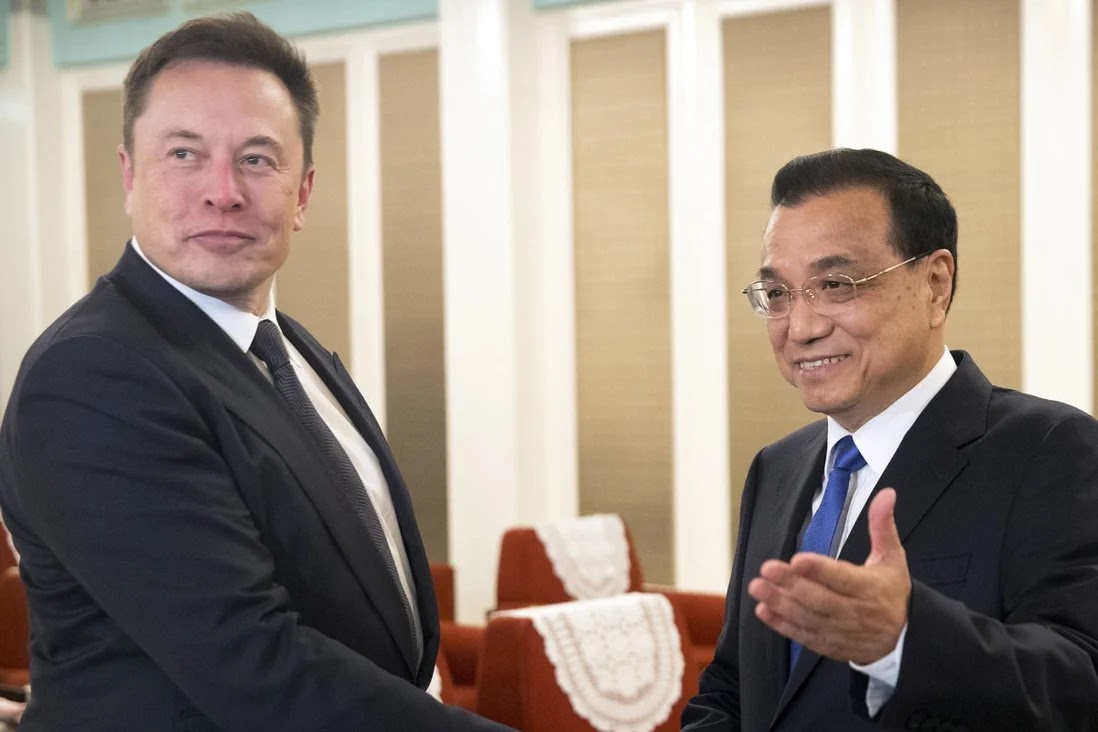
Elon Musk at the meeting with Li Keqiang in which he was offered Chinese permanent residency. He didn't take up the offer.


Public opinion may be firmly opposed, but it is not like Chinese policymakers themselves are giving any signs of being interested in encouraging immigration. The continued difficulty of applying for ten-year permanent residency cards, the one thing that allows foreigners to settle stably in China for a reasonable amount of time, is a symbol of this. The current conditions for applying for permanent residency are skewed towards those with extremely high skills in certain sectors, mostly high-tech industries, and CEOs and other people with very high incomes. Such policies cater only to people who probably have no wish to settle in China anyway, while ignoring most of the foreigners who live there, speak the language and could make a real contribution. 

Over the last few years it has been made slightly easier to apply for the PR permits, but it is still very difficult by international standards. The number of foreigners that has obtained one probably numbers in the thousands, and many who have lived in the country for years are still ineligible. The government did however offer permanent residency to Elon Musk, who must be the sort of immigrant they are looking for. Strangely, he chose not to trade his $37 million Bay Area estate for a fancy flat in Sanlitun or Pudong. The permits are also granted more readily to foreign citizens of Chinese ethnicity, both officially and in practice, reflecting the fact that overseas Chinese are still seen as somewhat more deserving of the right to live in China. 

What is certain is that half-hearted efforts to attract top-end scientists, engineers and venture capitalists are not going to solve the country's demographic problems, even in the unlikely event that all the Nobel prize winners and Elon Musks of the world suddenly decide to pack their bags and move to China. 

Of course, if one day the official attitude towards immigration becomes more positive, then public opposition does not have to be an insurmountable obstacle. The government/party has a way of doing what it feels is necessary, and getting the public to go along with it. It is possible to imagine that schemes might be implemented along the lines of those in the Gulf countries, with people brought in from poorer countries to work in factories or construction projects, placed in dormitories, and expected to leave once their contract is over. This might be better accepted by the public, although it could still cause resentment. 

Another possibility is that the development of automation and robotics will make the importation of cheap labour less necessary in future. But even then falling birth rates will still be a reality, and the people who run China clearly feel this to be a problem, with or without automation. 

Friday, March 12, 2021

Bitcoin won't liberate us

I've recently been trying to gain a deeper understanding of the cryptocurrency phenomenon, including but not limited to Bitcoin. What I find striking is the lack of reasonable, middle-of-the-road opinions, particularly on Bitcoin. It seems to be an extremely polarising topic: you either think it's the future of money, or you think it's nothing but a pyramid scheme. 

One thing I can say for certain is that Bitcoin is not a *conscious* pyramid scheme. Most of its proponents and fans fervently believe in its value, and think that naysayers simply fail to understand it, or work for the banks and financial service providers that are about to be swept away by the crypto revolution. Personally, I can see the appeal of Bitcoin on a conceptual level; a completely decentralized currency that can be transferred across borders with just a click is an interesting concept; it theoretically offers advantages that are not meaningless, especially if transactions speed up and the interfaces become easier to use. For instance, international migrants would be able to send money back home without going through Western Union, or paying its fees: all it would take would be a smartphone on both ends, and it is worth noting that there are far more people with a smartphone than a bank account in the world today. 

What is even more interesting is the idea that one day Bitcoin could turn into some sort of international reserve currency, in addition to or in replacement of the US dollar. The dollar's role as the global reserve currency causes all sorts of imbalances and problems, not least to the United States itself. For now Bitcoin is being bought entirely as a speculative asset, and it is hard to imagine it becoming a globally accepted store of value, but stranger things have happened. Currently its volatility makes it unsuitable for anything except speculation, but a large increase in its popularity and usage would probably stabilize its value compared to other currencies.

While I find Bitcoin an interesting concept, the anarcho-libertarian ideology many Bitcoin enthusiasts subscribe to leaves me a lot less convinced. At its basis lies a hatred of conventional currencies, identified as the root of our economic ills because they are controlled by central banks that can print new money and create inflation at will. And yet printing more money is a basic tool of monetary policy that can have effects both good and bad depending on how it is implemented, and governments won't just give up on it anyway. 

The idea that national currencies (what Bitcoin devotees disdainfully call "fiat money") could just be replaced wholesale by Bitcoin, as some of its most extreme fans are hoping, seems highly unlikely. While it may be impossible to ban Bitcoin all together, it would not be too hard for governments to disallow its use for ordinary business transactions. And even if it somehow were possible for the whole world to adopt a single currency, the results are in fact unlikely to be advantageous for poor countries, which often benefit from having weaker currencies.

Proponents of Bitcoin like to hype up its liberating potential, as a decentralized, untraceable and un-censurable currency based only on a source code and a blockchain no one can alter. Some of this reminds me of the idealism that surrounded the internet in the early nineties: it was going to make borders meaningless and allow everyone in the world to access uncensored information. It was a peer-to-peer system that no corporation could control. We have seen how that's worked out: a handful of corporations control most of our online life, social media poisons our public discourse, and as for uncensored information flowing across borders, well, China offers a great example of a highly censored and yet flourishing internet.

In the same way, even if cryptocurrencies become the norm, I doubt they will have the kind of liberating effect these people hope. Bitcoin is not the only cryptocurrency, after all. When it comes to corporations, Facebook is already developing its own cryptocurrency, the Diem (formerly known as the Libra), which unlike Bitcoin will not be decentralized, but controlled by the Diem Association, established by Facebook in Geneva, as a "de facto central bank". 

Many cryptocurrency advocates seem comfortable with the idea that in the future there will be a "free market of money", with scores of cryptocurrencies competing for popularity. If this results in us having to choose between Facebook and Google as our central bankers, it sounds to me like the beginning of a libertarian nightmare. And indeed, there are quite a few right-wing libertarians among cryptocurrency enthusiasts. The sort of people who want the state to play as small a role as possible in the economy. In fact it was Friederich Von Hayek, the Austrian economist remembered alongside Milton Friedman as the pioneer of ultra-libertarian free-market thought, who first argued in his book Denationalisation of Money: the Argument Refined for a complete free market in the production, distribution and management of money to end the monopoly of central banks.

Friederich Von Hayek
                                                       
Of course, there is no reason to think governments are just going to take these threats to their monetary sovereignty lying down. France's finance minister has already stated that his country would not allow the use of Facebook's cryptocurrency, while the US House Committee on Financial Services has asked Facebook to cease its development.

The other thing is that many governments may soon be rolling out digital currencies of their own, which might offer some of the convenience of cryptocurrencies while still being linked to a national currency. As usual, China is moving faster than anyone. The new digital Yuan has already been rolled out in four cities across China, and will soon go national. It will not be based on blockchain and cannot be called a cryptocurrency, but it can be seen partly as a reaction to Bitcoin's popularity. 

In practical terms, using a digital Yuan would not be much of a change for most Chinese, who have barely used cash for years and settle all transactions through WeChat and Alipay. This will however bring all digital transactions under the direct control of the state, rather than have them go through two private corporations whose size and dominance have started to bother the Party (look at Jack Ma's recent travails). Cash will probably go on existing, but become even less widely accepted than it currently is. Of course, all transactions made through the digital Yuan will be completely traceable by the People's Bank of China. But then again, no one in China is under the illusion that Tencent and Alibaba aren't sharing their data with the authorities, so protection of privacy is not really an expectation anyway. 

While a digital Yuan might not change anything in the lifestyle of your average Chinese, it may hold various advantages for the government. For instance, it would theoretically allow them to set negative interest rates. Some are even predicting that it could offer a way to build a new international payment architecture to rival the SWIFT system, which would be centred on the Yuan and not vulnerable to US sanctions. This is an interesting thought, but the Yuan challenging the dollar as a leading international reserve currency continues to seem unlikely to me. The Chinese authorities are clearly not going to open up their financial markets or start running trade deficits, as they would have to do if they wanted their currency to go global. It is the US that currently runs the trade deficits, and this suits them fine. Still, a digital Yuan might help them to settle payments with Iran or North Korea, say, without going through SWIFT or other systems centred around the US.

In any case, China's digital Yuan may well presage the future of money much better than Bitcoin does. All advanced countries could follow suit, digitalizing their money while doing what they can to limit transactions in unauthorized cryptocurrencies. Bitcoin will continue to exist on the margins and find its uses, or perhaps even become a widespread and accepted way of storing value. But it won't save us from financial crises or revolutionize our basic relationship with money, any more than the internet has saved us from propaganda or from national borders. The truth is that no new technology can "liberate" us on its own, unless it is accompanied by deeper changes to the political and economic system.

Thursday, February 18, 2021

Weekly dispatch: the Year of the Metal Rat in review

The memorable year of 2020 may have ended on the 1st of January for most of you, but in China it only really ended a week ago. The proximity of the Chinese new year to the Western one, and the fact that the Chinese calendar has no agreed starting point for counting the years, means that people in China often mix the two systems. That's why Beijing was full of people wishing each other a "Happy 2021" on the 11th of February this year.

Funnily enough Chinese astrology had predicted that the last year in the Chinese calendar, roughly equivalent to 2020, might be a difficult one. If you want proof, just look at this article published in early January last year, before Covid-19 became a real concern. The reason is that 2020 was a year of the Metal Rat, meaning that its element was metal and its animal was the rat. Most people know that in the Chinese calendar every year has an associated animal, but not everyone knows that each year also has one of the five elements attached to it. It is the combination of the animal and the element that determines how auspicious a year might be. Years of the Metal Rat are considered to be highly inauspicious, and recur every 60 years; many have pointed out that every one of these years seems to bring disasters in its wake for China: 1960 saw the terrible famine induced by the Great Leap Forward, 1900 the sack of Beijing by the Eight-Nation Alliance, and 1840 the beginning of the First Opium War. 

Personally I am not a believer in horoscopes, either Western or Chinese, and it strikes me that disasters have struck China on quite a few other years over the last two centuries; I also wonder whether these predictions are supposed to be valid for the rest of the world too, or whether Chinese horoscopes, like so much of Chinese culture, are only supposed to work for China. All the same, I can see that if I were an astrologer, the exceptional calamity of the Covid-19 pandemic sweeping through the world on such an inauspicious year would seem like an obvious confirmation of my beliefs (although the pandemic actually took off just before the Chinese New Year of 2020, when we were still in the year of the Earth Pig).


In any case, the year of the metal rat may have been an unmitigated calamity for the world, but in the run up to the spring festival the Chinese media have done their best to paint the year as a success story for China, a time when the nation came together and defeated a terrible plague thanks to its people's sense of sacrifice and discipline and its firm leadership taking wise and decisive action. There is little reason to think most ordinary Chinese reject this view; in fact, it is pretty clear to me they do not.

It wasn't always obvious that things were going to go this way. Just over a year ago, on the day of the death of Dr. Li Wenliang in Wuhan, my WeChat Moments was swelling with open anger and rebelliousness of a kind that I had not seen in years. Chinese WeChat contacts who are normally apolitical or pro-government were suddenly venting their feelings of disgust and disappointment, posting openly subversive thoughts of a kind you don't often see expressed on Chinese social media. Of course my Chinese WeChat contacts are not necessarily representative of broader society, but it's clear that these feelings were widespread, at least among the middle class.

One year on, those feelings of anger and dissatisfaction are gone, dead and buried. It is easy to see what changed people's minds: China's striking success at containing the pandemic, compared with the abject failure of much of the rest of the world to do so. The devastating toll the pandemic has taken on the United States, China's arch-nemesis, has been particularly impactful. The media has done its best to stress the contrast between China's successful handling of Covid-19 and the mess going on in other countries. The fact that China was the only major economy to record any growth in 2020 has never been missing from the triumphalist commentary of the past few weeks.

While you can condemn that commentary as biased and one-sided, the basic point cannot be denied: China has contained this pandemic much more effectively than most countries have done. While the debate in the West revolves around the question of whether to sacrifice public health or the economy, in China there is no need for such a debate: the extreme measures taken to stop the pandemic from spreading have ended up protecting both public health and the economy. Ordinary Chinese are now less able to go abroad than at any point since the end of Maoism; but unlike then, they currently have little wish to do so, seeing China as an island of safety in a world of chaos and danger.

The events of 2020 have probably ended up accelerating a shift that was already underway in Chinese perceptions of their country's relationship to the West and its place in the world. Many have identified the beginnings of that shift with the great financial crisis of 2008, which brought havoc to the US and Europe while largely sparing China. Western officials and diplomats recount how there was a distinct change in the tone of the Chinese officials they spoke to around this time. Suddenly they exhibited far more self-confidence, and refused to even pretend to take Western criticism of their system seriously anymore, believing that governments unable to avoid such a catastrophic meltdown of their own financial system had no business lecturing others. For years they had been preached at about the virtues of free and fair markets, but from what they could see it was free markets that had led to the financial crisis.

This shift in attitudes trickled down to the common people as well. China's economic growth and its new world-class telecommunications and transport infrastructure, which in some ways put Western countries to shame, gave rise to a widespread attitude that the country had "nothing to envy" the West anymore. Living in China, I have observed this change first-hand. When I first came to China after the Olympics, local people would frequently ask me questions along the lines of "why did you move to China? Life in your country must be so much nicer", or "why would you want to move from a rich country to a developing one like China". It is now several years since anyone has asked me anything of the kind. 

Propaganda played its part in fuelling these attitudes, and don't let anyone tell you it didn't; but they have a grounding in fact. Chinese who travel or study abroad see little that would contradict these beliefs, and much that would confirm them. Experiences like changing flights in the crumbling airports of the US or constantly having no reception on their phones in Europe (this never happens in China) helps to convince them that their country is already ahead in many ways. The strengths of Chinese governance are real and getting stronger, even while the nasty sides, which most people here prefer to ignore, get nastier.

And now this. The shambolic and ineffective response to Covid-19 of Europe and North America may well be the last nail in the coffin for the West's reputation in China. If they didn't already, most Chinese now see their system as more efficient and able to deliver better results. The fact that China is one of a small number of countries where there is virtually no risk of being infected by the virus is reinforcing the already widespread perception that China is an oasis of safety, order and progress amidst a world that is 乱, chaotic and dangerous.

Of course, one could make plenty of good counter-arguments. Other Asian countries, some of them liberal democracies, have also done really well at containing the pandemic. There is the issue of the initial cover up in Wuhan, which seems to have been all but forgotten here in China. Pandemic aside, the view of China as a safe and orderly place as opposed to a messy and dangerous Western world is based as much on misconceptions and confirmation bias as it is on facts. While China's infrastructure is impressive, the fact remains that life is more comfortable and stable for most people in the West, average incomes much higher, and the justice systems far more likely to deliver actual justice. 

But while all these counter-arguments make sense to me, they are unlikely to convince the Chinese public even if they reach their ears. Like it or not, many Chinese see their country as engaged in a global competition with the West, and the events of 2020 have helped convince them they are on the right path and have nothing left to learn from their adversary. I would not see this as a problem, if what they were rejecting were things like privatized healthcare, unregulated financial markets and "neoliberal capitalism". Unfortunately, basic liberal ideals like freedom of expression, representative democracy and checks and balances on the power of the state are also seen as inextricably linked to the Western model. If that model is seen as failing to deliver prosperity and safety even for its own people, then liberal democracy loses its appeal and its relevance to most Chinese, which is what has in fact happened. While this trend has been years in the making, the events of 2020 have done a lot to seal it.

This can only be seen as a huge problem, given that those liberal ideals remain as valid now as they ever did, and neither China nor any other country offers a real alternative to the world. If there is any meaning Western societies can draw from the rise of China, it should be an encouragement to do a better job at living up to their own lofty ideals.

Tuesday, February 9, 2021

Weekly dispatch: covid denialists and class in China

I recently got into an argument with an old acquaintance on Facebook. Nothing surprising there, it often seems Facebook was designed to make people argue. The reason, though, is that this person (who I have known for years) turned out to be a Covid-19 denialist of the most extreme kind. After I messaged him to ask how he was getting on, our conversation quickly turned to the pandemic. To my horror, he argued that Covid-19 is no more dangerous than an ordinary flu, that there is no evidence that hospitals become overwhelmed when the virus is allowed to spread, that the whole world is in the grip of a baseless hysteria, and that it's ridiculous to shut people in their homes and wreck people's livelihoods for what is just an ordinary virus. 

I pointed out to this old acquaintance of mine (who is Italian) that during Italy's first Covid-19 outbreak, in Lombardy in March 2020, there were towns where a significant percentage of the elderly died, and the crematoriums could no longer take in all the dead. He claimed that in Bergamo (the worst-struck city in Italy and perhaps in Europe) it was actually the doctors who got the treatment wrong and somehow killed the patients by putting ventilators on them. This is how denialists argue: when the death toll is so bad they just can't deny the problem, they blame the doctors for killing the patients.

I knew by then that arguing with this person was a waste of time, but I just couldn't stop myself. I sent him a link to an interview with a Bergamo doctor from last March, in which the traumatized doctor describes having to choose which patients to save amid a shortage of ventilators. My acquaintance blasted the source (il Corriere della Sera, one of Italy's most serious and respected papers), and refused to engage with the article any further. He proudly claimed that he never wears a mask and goes out and meets people all the time. He said he was amazed that an intelligent person like me would believe this nonsense, and that I was part of the problem. People were losing their jobs and livelihoods because of this unjustified paranoia over nothing at all. Then he blocked me.

I certainly won't lose any sleep over this guy blocking me. I only met him in person years ago, and our subsequent interactions were all online. On the other hand, the level of disconnect from reality that he is displaying really is disturbing. I wouldn't consider this acquaintance of mine to be a great intellectual, but he also isn't a stupid person, by any means. He has lived abroad for years, and has seen the world. And yet he believes all the dead in Bergamo were killed by the doctors, not by Covid-19. And he's not the only one with such views, by any means. The Western world is clearly full of people who believe similar nonsense.

It is not hard, of course, to understand the psychological basis of these beliefs. There is a limit to how long people can be told to forego their ordinary daily pleasures. Everyone is tired, and wants to get back to living normally. But the virus is scary, and so people exorcise it by doing their best to convince themselves and others that it isn't really that dangerous to begin with. Of course, plenty of people are also losing their jobs or seeing their businesses go bust because of lockdown policies. There is crossover, probably, between those who oppose lockdowns because they threaten their livelihoods, and those who refuse to recognise the overwhelming evidence that Covid-19 is far more dangerous than an ordinary flu. I am lucky enough to have a safe job, in a country where I can more or less go about my business normally (although I can't go home). I realize that not everyone is so lucky. All the same, I like to believe that I would remain rational and not go around spreading lunatic conspiracy theories even if my circumstances were less fortunate.

In contrast with the West, here in China it is rare to hear people argue that Covid-19 isn't dangerous or doesn't deserve the measures used to contain it. That doesn't mean they can't be made to believe some highly dubious things; there is a not inconsiderable part of the Chinese public that believes, or claims to believe, that the pandemic actually originated in America, or in any case most definitely not in China. Still, whatever ridiculous beliefs people in China may hold, these don't get in the way of them exercising caution and staying safe, or accepting vaccinations when they are offered. If anything, the population seems to feel no resentment at all about following the government's anti-pandemic measures, even when they are clearly unnecessary and over the top.  

Saturday, January 30, 2021

Weekly dispatch: why is China vaccinating the young first?

So it's happening. The 物业 (property management) of my office building in central Beijing is collecting the names of all those working in the building who would like a shot of China's new Covid-19 vaccine. Although there is no fixed date yet, it seems that after the Spring Festival it should be possible for us all to get vaccinated. It is not yet clear if the shot will be free for foreign citizens, as it is for the Chinese, but in the meantime I have put my name on the list. All of my colleagues have done the same; there is no widespread scepticism about the vaccine's safety here.   

Only a fraction of the Chinese population has currently been vaccinated, but at least in Beijing mass vaccinations are starting to be rolled out. Notices have also appeared in my 小区 (neighbourhood), announcing that vaccinations will be available next week for all long-term residents aged 18 - 59. Yes, here in China the vaccine is being given to the young first. People over 60 are not being offered the vaccine for the time being, in stark contrast to much of the world.

The Sinovac vaccine has apparently only been tested on younger segments of the population, which would currently make it unsafe to administer to older people. This suggests that the Chinese strategy, from the beginning, was to focus on those of working age rather than the elderly. This strategy makes some sense for China, given the situation. The pandemic has been brought under control within the country, and it is unlikely to return with a vengeance, considering the gargantuan efforts made to isolate and contain new outbreaks. The elderly are not at serious risk of infection, so the idea is to focus on vaccinating people who need to go abroad for work or study, those who work in certain professions considered at risk (medical staff, airport staff, those who work in cold storage units, even taxi drivers) and eventually a large number of working-age people. 

All this is understandable and also convenient for me, since it means I am being offered a vaccine far earlier than I would be almost anywhere else. On the other hand, it will be an issue for the many developing countries that are making use of the Chinese vaccine. China's large production capacity, and the fact that the Sinovac vaccine doesn't need to be stored at extremely low temperatures like the Moderna and Pfizer vaccines (-20 and -70 degrees, respectively), but can be stored in a normal refrigerator (as can the Oxford vaccine), makes it an attractive solution for the nations of the "global south". 

At least some of the countries that have bought large quantities of Chinese vaccines, however, are imitating China's strategy of inoculating the young first. Most strikingly, Indonesia has already bought three million Sinovac vaccines, and it is only using them to inoculate people in the 18-59 age range, just like China is doing. This is a surprising choice for Indonesia, the country with one of the worst Covid-19 pandemics in Asia, where the official number of deaths just keeps rising and rising, probably matched by an even higher unofficial death toll. In many cities hospitals are close to collapse, while the government seems to have given up on enforcing strict lockdowns.

The Indonesian health minister has justified this choice by saying that there is not enough data on the safety of the vaccine for older people. Indonesian officials have also pointed to the fact that vaccinating the young will help restart the economy and stop the spread of the virus, but it can be assumed that the lack of tests conducted on the elderly was part of the reason behind this decision. The Turkish government, which has bought millions of vaccines from China, has also announced that people over 65 will not be vaccinated at first "to avoid risks". Turkey also has an ongoing pandemic, in which the elderly are most likely to become casualties. Regardless, countries like Turkey and Indonesia have little choice but to make do with the Chinese vaccine, at a time when the supply of the other vaccines is still so limited that even the EU and the UK are fighting to get their hands on as many of them as they can.

On a personal level, as a foreigner living in China, the strategy of vaccinating young people first makes me wonder when the country's borders will finally open up again. Unlike in Europe and North America, here in China the plan is clearly not to vaccinate those most at risk of dying or getting seriously ill, and then letting everyone else get on with their lives. On the contrary, as long as the elderly are not vaccinated it will be especially important to do everything possible to prevent the pandemic from spreading again. This will mean, among other things, keeping in place the incredibly tough quarantine measures and the restrictions on the entry of foreign citizens. 

I doubt that even getting vaccinated will allow me to enter China from abroad without quarantine (which, from my perspective, would be one of the best reasons to get the shot); it is not certain, after all, that those vaccinated are unable to be infected and then spread the virus, and the Chinese government can accept nothing less than 100% certainty that not a single new case enters the country. This approach is leading to ever stricter measures. Most provinces now require 21 days of quarantine, not 14; Beijing and several other cities have also started requiring all those in quarantine to take anal swabs, because apparently they are more reliable than nose and throat swabs! As cases inevitably slip through the net, leading to new lockdowns of neighbourhoods and even entire cities, the measures taken to keep the virus out become ever more intrusive and grotesque. 

I don't doubt that China will eventually get round to vaccinating most of its population, including its senior citizens. This process might, however, take a couple of years, especially since vaccines are also being exported abroad at the same time. In the meantime, China will continue to be cut off from the world for most intents and purposes.

Thursday, December 17, 2020

The sad decline of new atheism

While I was doomscrolling my way through Twitter one evening last month, the tweet below caught my attention: 


Whenever I see the name Richard Dawkins, I am taken back to the innocent days of the mid-2000s: the times before social media and fake news, financial crises and pandemics, when it seemed impossible that a man even more incoherent and ignorant than George W. Bush could one day sit in the White House; when China still seemed to be set on an inevitable course towards a more democratic and open future; when most Europeans were still excited about the Euro and European integration; and when "woke" was nothing but the past tense of "wake".

One of the intellectual currents of the day was the rise of the "new atheists". The term was coined in 2006 by American journalist Gary Wolf, to describe a new breed of intellectuals who felt that organized religion and irrational beliefs had no justification in the modern world, and that they should be aggressively criticised and countered in the public sphere through rational argument. That same year saw the publication of two of the seminal texts of this intellectual trend, "the God Delusion" by Richard Dawkins and "Letter to a Christian Nation" by Sam Harris. Daniel Dennett's more measured "Breaking the Spell: Religion as a Natural Phenomenon" also came out in 2006. In 2007, Christopher Hitchens produced a polemic entitled "God is not Great: why Religion Poisons Everything". That same year, Dawkins, Harris, Hitchens and Dennett met up in Washington DC, for a two-hour chat that later earned the four participants the jokey moniker of the "four horsemen of the non-apocalypse". 

For a while, the issue of "atheism vs. religion" became one of the dominant themes of intellectual discourse in the Western, English-speaking world. High-profile debates were organised between the two sides; book after book debated the issue; even the Church of the Flying Spaghetti Monster became a cultural phenomenon. Richard Dawkins became the improbable star of the atheist movement, as he found himself invited to talk show after talk show on both sides of the Atlantic so he could espouse his materialist, and very English, worldview. Dawkins was also the star of the Global Atheist Convention that was held twice in Melbourne in 2010 and 2012 and, tellingly, never again.

Yes, because some time around the turn of the decade the whole question of atheism started to lose its urgency. This well-argued blog post presents some compelling evidence: Google searches for terms like "atheism", "atheist", "agnostic" and "creationism" started to decline after 2012, in some cases quite dramatically, as did traffic to some of the major atheist websites. It is a tendency that is obvious to anyone who follows such trends. It's not that religion has disappeared, or is close to disappearing, in the Western world; it's more that most believers and atheists have simply gone back to blissfully ignoring the other side's existence.

Why did this happen? One possibility is that the atheists, at some level, won the argument. The US has long been an outlier within the developed world because of the strength of popular religious feeling, with going to church the norm rather than the exception in many areas of the country. But over the last decade there has been a clear shift: the percentage of adults defining themselves as Christian dropped by 12%, to around two thirds, while the percentage of people defining themselves as atheist, agnostic or "nothing in particular" rose by 17%, to around a quarter of the population (with other religions taking up the remainder). According to one study, the shift toward secularism clearly began to take place in 2007, the year after the God Delusion and Letter to a Christian Nation came out, when Dawkins and his fellow atheists were at the peak of their popularity. It isn't unreasonable to assume that those books, and the debate surrounding them, made being atheist or agnostic much less of a taboo for parts of the population, especially those who called themselves Christian more out of habit than because of any strong conviction.

If this is so then the "new atheist" intellectuals should be credited with a striking victory, something that generally gets lost in discussions about why their cause seems to have lost steam. But can this really be the only factor? Much of the American population is still religious after all, and the evangelicals are still a force to be reckoned with, so it's not like atheists have no one left to argue with. What's more Dawkins and Hitchens both came from Britain, a country where popular religiosity was not as strong as in the US to begin with, and where there has not been such an obvious move away from religion in recent years either.

Perhaps it is necessary to look at the even bigger picture. The world today is certainly a more troubled place than it was 15 years ago, and that's even without the Covid-19 pandemic. Authoritarianism, nationalism, xenophobia and populist politics have been on a steady rise everywhere for at least a decade, while the financial crisis of 2008 seriously dented the Western middle class's sense of security. Geopolitically, people's focus has shifted somewhat from the Middle East to Russia and China. Religious issues don't really have anything to do with the West's constant state of tension with China, a country ruled by a party that still officially bars its members from following any religious faith at all. Perhaps, in today's world, the truth or non-truth of religious tenets is just too abstract of an issue for people to care about? 

This might be a good argument, if it wasn't for the fact that many of the issues around which our current "culture wars" are centred, for instance the rights of transsexual people, are equally abstract to most of us. The intelligent, if America-centred, blog post to which I already linked above claims that the deciding factor was a shift in the progressive "hamartiology" (doctrine of sin). Over a decade ago, parts of liberal, Democrats-supporting America liked to define themselves as those who followed science and reason, and decided that society's problems were the result of people "blindly following three-thousand year old fairy tales". This was in keeping with the spirit of the times, since the evangelical vote had been instrumental in bringing G.W. Bush to power and things like Intelligent Design, radical Islam and the Israeli-Palestinian conflict were all over the news.  

In 2008 Obama gained the presidency, and then in 2014 the Ferguson riots happened, and the focus started to shift towards race. Especially after Trump was elected, progressive America decided to define itself in opposition to racism and sexism. The adversary was no longer those blinded by irrational, magical thinking, but rather those blinded by their own privilege, or unwilling to let go of it. Many atheist bloggers and activists turned into "social justice" bloggers and activists, while others shifted towards the alternative right. All of a sudden, arguing over the existence of god or whether we descend from apes felt very yesteryear.

It is certainly true that arguments over race, gender and sexuality seem to have superseded concerns over religion, not just in the US but all over the Western world. In the current climate it would certainly not pass unnoticed that the four stars of new atheism were all heterosexual white men; in fact, it seems incredible that this was hardly even remarked upon back in 2007. 

What is striking is that two of the main figureheads of the atheist movement, Richard Dawkins and Sam Harris, have now become quite vocal adversaries of the new wave of left-wing identity politics. In the process, they have expressed support for some pretty unpleasant and reactionary causes and ideas. Over the last few years, Dawkins has gotten into all sorts of rows over his views on Islam, feminism and sexual harassment. Nowadays the Oxford biologist seems to spend more time rebutting accusations of racism and sexism than discussing religion or the origins of life. Most recently, the famous debating society of Trinity College Dublin rescinded an invitation for Richard Dawkins to speak because of "concerns" over his views on Islam and sexual assault.

Some of the accusations would seem to be well grounded. Back in 2011, Dawkins wrote an infamous letter entitled "Dear Muslima", in which he attacked atheist and feminist blogger Rebecca Watson for complaining about being propositioned by an unknown man in an elevator at 4 AM during an atheist convention in Dublin. Apparently the fact that Muslim women have much worse stuff to complain about means that Western feminists like Watson are whining about nothing. In the end, all that happened was that "a man in a hotel elevator invited her back to his room for a coffee". Never mind that the man was another delegate with whom Watson had never spoken, who thought it quite normal to invite her to his hotel room for "a cup of coffee" at 4 AM. Women in Saudi Arabia have it far worse, so what's the problem?

Dawkins later apologized for the letter, but in the meantime he has attracted more controversy with questionable tweets and remarks about how "date rape is bad; stranger rape at knifepoint is worse", how rape victims shouldn't be considered reliable witnesses if they were drinking at the time of the rape, and how the "mild paedophilia" he encountered as a schoolboy in the fifties cannot be judged by today's standards. Some of this could be blamed on the medium of communication: when you spend your days on Twitter, as Dawkins seems to do, you are likely to say a few idiotic things here and there. For a man in his seventies, getting the hang of the minefield that is social media must be tough. I also suspect that the sting of being called a misogynist has caused him to double down on these positions, rather than wisely steer clear of such topics. Still, while Dawkins did at one point claim to be a feminist, he has clearly decided that he has a strong antipathy towards "social justice" politics, "wokeism", "political correctness" or whatever else you decide to call it. 

Sam Harris has veered off into even darker directions. In 2017, Harris hosted the conservative writer Charles Murray on his podcast. Murray is famous (or infamous) for his view that different races display differences in average IQ that can only be explained by genetics, with blacks and Hispanics lower down the intelligence pole than whites and Asians. Murray was denied a platform and shouted down by students in Middlebury College, which convinced Harris that the writer was a victim of "liberal intolerance" and "political correctness gone mad" who deserved a platform. Most feel that during his podcast Harris did very little to challenge Murray and his toxic arguments, and generally seemed sympathetic towards him. Since then, Harris has loudly and repeatedly taken position against Black Lives Matter and "woke culture".

What of the other two champions of new atheism? Christopher Hitchens sadly died an untimely death from cancer in 2011, but one feels that if he were still around he would probably be as strong a critic of left-wing identity politics and "cancel culture" as anyone; as for Daniel Dennett, he was always the odd one out, being more of a scientist than a polemicist, and he usually avoids such topics.

Clockwise, from top right, Dawkins, Hitchens, Dennett
 

Perhaps it isn't surprising that there would eventually be a messy divorce between atheism and progressive politics. "New atheism" presented itself as a simple call to reject superstition and dogmatic faith in favour of rationality and evidence. But its proponents inevitably went beyond that, commenting on social and political issues in a way that was unsurprisingly affected by their personal origins and biases. Atheism's main public champions came from comfortable middle and upper-class backgrounds in the US and Britain, and they could be rather blind to the social and cultural dynamics which create religious feeling among the disenfranchised. What's more, while they were genuinely scathing of all monotheistic religions, their greatest scorn and condemnation was always reserved for Islam. 

Richard Dawkins was born into a family of the British landed gentry, and went to a renowned Church of England public school before moving on to Oxford University. While he abandoned Anglicanism as a teenager, he has never hidden a certain affection for the faith. He has called himself a "cultural Anglican", and praised the Church of England for its "gentle decency". He has also openly claimed that while Anglicanism may not be good, it's still better than Catholicism, Mormonism and Islam. He seems to have something of a blind spot regarding Anglicanism's own nasty history of discrimination and intolerance against Catholics, and, I suspect, the misdeeds of British imperialism as a whole.

Dawkins believes that organised religion is at the root of much of what is wrong in the world. As he claims in "the God Delusion": "Imagine, with John Lennon, a world with no religion. Imagine no suicide bombers, no 9/11, no 7/7, no Crusades, no witch-hunts, no Gunpower Plot, no Indian partition, no Israeli/Palestinian wars, no Serb/Croat/Muslim massacres, no persecution of Jews as Christ-killers, no Northern Ireland troubles, no honour killings, no shiny-suited bouffant-haired televangelists fleecing gullible people of their money (God wants you to give till it hurts). Imagine no Taliban to blow up ancient statues, no public beheadings of blasphemers, no flogging of female skin for the crime of showing an inch of it."

This is, of course, a highly simplistic worldview which dismisses all of the inequality, the historical injustice and the economic and social dynamics that lie at the basis of these problems. Dawkins also ignores the fact that in many parts of the world religious affiliation is basically a marker of your ethnic identity in the same way as your language or your surname, and has little to do with your actual beliefs. Still, one could argue that such simplifications are a necessary part of any sweeping argument about the world, and it is hard to deny that organised religion has been responsible for fanaticising and stultifying its followers, sowing division, promoting oppressive sexual and gender norms, and encouraging rejection of new scientific knowledge, including through the modern aberration of "creationism" that rightly outrages Dawkins. 

What many found troubling, right from the start, was Dawkins' very obvious aversion towards Islam. I happen to think Dawkins has a point when he says that you do not need to be a theologian to criticise religion or understand that religious beliefs are irrational and unproven, any more than you need to be a "fairyologist" to understand that fairies don't exist. For this reason I see no scandal in him condemning Islamic beliefs as irrational, in spite of not having read the Quran by his own admission. What I find more problematic, on the other hand, is when he veers off into geopolitics and blames the problems of the Muslim world entirely on religion, or talks about Muslim countries as if they were all no different from Saudi Arabia. His views on such issues are basically just the "common sense" of the Western establishment, and he has never had anything of particular insight to add to this debate.

Over the years, Dawkins' rhetoric on Islam has become more and more extreme. In 2017 he wrote: "It's tempting to say all religions are bad, and I do say all religions are bad, but it's a worse temptation to say all religions are equally bad because they're not. If you look at the actual impact that different religions have on the world it's quite apparent that at present the most evil religion in the world has to be Islam.In all fairness, he went on to say that he doesn't consider individual Muslims to be evil, and that he opposed Trump's Muslim travel ban. On another occasion he tweeted "(Justifiable) Islamophobia is poles apart from (bigoted) Muslimophobia. Muslims are Islam's main victims." He has repeated the old chestnut that Islam is not a race, so being opposed to Islam cannot possibly make one bigoted.

Sam Harris, the son of a Quaker actor and a Jewish screenwriter brought up by his secular Jewish mother in Los Angeles, also detests Islam. Even more than Dawkins, he has let his hatred of this religion lead him to take up some pretty questionable positions. In "Letter to a Christian Nation", Harris makes the reasonable point that most developed countries, and particularly Western European ones, are far less religious than the US and pretty much anywhere else on earth, and at the same time are among the healthiest, wealthiest, peaceful and most equal societies in the world. He then adds that "insofar as there is a crime problem in Western Europe, it is largely the product of immigration. Seventy percent of the inmates of France's jails, for instance, are Muslims." Perhaps this might be because Muslim immigrants from France's former colonies in North Africa make up the bulk of the country's working poor and unemployed, rather than because being a Muslim or having a religion make one more likely to commit crimes, but such considerations don't enter the dangerously simplistic picture painted here.

Later on, Harris claims in alarm that "the birthrate among European Muslims is three times that of their non-Muslim neighbours. If current trends continue, France will be a majority-Muslim country in twenty-five years - and that is if immigration were to stop tomorrow." A quick look at some actual statistics shows that this rhetoric has no basis in fact. In 2016, ten years after the book was published, Muslims in France were still only 8.8% of the population (the highest percentage anywhere in the EU), and projections on the share of Muslims in Europe in 2050 went from a low of 7% to a high of 14%, depending on levels of immigration. 

Finally, and most strikingly, Harris says that "Political correctness and fear of racism have made many Europeans reluctant to oppose the terrifying religious commitments of the extremists in their midst. With a few exceptions, the only public figures who have had the courage to speak honestly about the threat that Islam now poses to European society seem to be fascists. This does not bode well for the future of civilization." The only thing left is for him to claim that Europe is about to turn into "Eurabia", a favourite term of far-right xenophobes.

I am certainly not blind to the reactionary, misogynist and intolerant aspect of Islam as it is practiced today by Islamic communities, or to the dangers of Islamism as a political project. No one should feel they have to hold back from criticising Islamic tenets because people might find it offensive, or for fear of being called prejudiced. No one should feel forced to repeat platitudes about it being a "religion of peace" either. But when Sam Harris describes Muslim immigrants in Europe as a threatening alien body, bound to take over the continent unless something is done, he really does sound like the worst kind of right-wing extremist. These arguments can only be described as deeply problematic, and yet they raised few eyebrows at the time.

Consider also that this was the time when the US army was bogged down in Afghanistan and Iraq. Harris expressed support for the invasion of Afghanistan, which he saw entirely as an issue of fighting Muslim fundamentalists who would understand no other argument. He opposed the war in Iraq, but without much conviction, calling it a "distraction" from the necessary war in Afghanistan. Richard Dawkins held exactly the same positions. Christopher Hitchens went further, strongly supporting the US invasions of both Iraq and of Afghanistan. His extremely strong antipathy towards Islam was certainly part of the reason he became such a fan of "liberal interventionism” in the last decade of his life. The sense of injustice that many people in the non-Western world, both Muslim and non-Muslim, feel over such military interventions was clearly lost on the prophets of atheism.

Dawkins with Ariane Sherine, launching the "atheist bus campaign" in 2008

In essence, new atheism was a product of its time, and it always had a conservative and Western-centric side to it. It has now lost the attention of the public, while some of its most famous faces are busy turning themselves into pariahs in progressive circles. And yet, while the contention that most of the world's problems derive from organised religion was clearly simplistic, the call to view the world through the lenses of rationality and scientific evidence hasn't lost any of its relevance. One need only look at the proliferation of idiotic and scientifically illiterate conspiracy theories about Covid-19 and vaccines, and the widespread distrust of medical science and faith in "alternative" treatments that laid the ground for them. Irrational beliefs continue to exist and thrive in the modern world, whether in the guise of holy books and revelations or of quantum healing and homeopathy.  

Thursday, November 5, 2020

Nothing normal under the sun: a few observations on China's new normal.

The word "surreal" may be overused nowadays, but it really is the only way to describe the experience of being back in China for the first time since before the pandemic. In most ways it feels like picking up my life where I left it, in a society where very little seems to have changed, and the fear of the virus is already a distant memory. I am, it must be said, glad to be in a place where you do not need to wash your hands all the time like a hypochondriac, or worry about getting too close to people on the street, or wonder whether your runny nose is just an ordinary cold or if you should go and get tested just to stay on the safe side. 

On the other hand, home has never felt so far away. It may only be an 11-hour flight back to where I'm from, but the pandemic makes Europe and China feel almost as far apart as they did when it took weeks of journey by ship to travel from one to the other. The world was already becoming more divided, but Covid-19 has created fissures that may take decades to heal. 

Now that I've been back in China for five weeks (of which the first two were spent in quarantine), I have a few observations to share on China's post-pandemic "new normal".


1) Daily life in China feels normal

Life in China really does feel like it's back to its pre-Covid "normality". Between the initial lockdown, mass testing, the isolation of Hubei from China and then of China from the world (see below), the virus has been stamped out. Fear of infection has dissipated, and the general public trusts that the pandemic has been effectively controlled. People wear a mask on public transport because they have to, but many no longer wear one, or wear one pulled down, when they walk the streets. Even those who do wear a mask no longer seem to have any real fear of infection; it's more that putting on a face-covering before going out has become almost automatic, and you never know when a place may require it. It's also a way of signalling that you are doing your bit to stop the pandemic. The rather odd fashion of hanging your mask around your sleeve when you aren't wearing it has also taken shape.   

In Chinese cities all workplaces and commercial establishments are open again, with no particular restrictions in place. I have seen signs in public offices and gyms asking people to maintain a one-meter distance to avoid infection, but nobody seems to take them seriously anymore, even in police stations. Quite simply, getting infected is no longer a matter of concern.

Travelling within Mainland China is also not a problem anymore, except if you happen to pass through a place exactly when one of the occasional new outbreaks occur. This is unlikely, but if it does happen you run a risk of being caught up in a new lockdown, or having restrictions placed on you when you go back home. The authorities will pull no stops to make sure that any new outbreaks of Covid-19 remain contained. I know a Beijinger who visited Qingdao (where an outbreak was put down a few weeks ago) during the national holidays. After returning to Beijing, she was required to take a PCR test by the government. 

Happily, the fear of foreigners as carriers of the virus and the resultant xenophobia also seems to have died down. Since I have come back, I have not noticed anyone being scared of sitting next to me in the subway, avoiding me on the street, or showing me any particular hostility. No shops or bars have refused me entry, either. Last spring, all of these occurrences were common across China for foreign-looking people. Foreigners can still encounter problems when travelling, however. I have heard of recent cases of tourist sites rejecting foreigners outright, or demanding that only foreigners produce evidence of a PCR test, and it seems that hotels are also being more difficult than usual. But as long as you stay put, at least, being a foreigner no longer seems to be a problem. 

In general it feels like life in China, or at least in Beijing, has not changed too much since before the pandemic. Quite simply, after a brief interruption, the Chinese system has returned to what passes for normality here. A few restaurants have closed, and that's about it. While I realise that it is risky to make observations about the state of China's economy based on personal impressions of life in a major city, I will note that the Beijing subway seems to be as packed as it always was, suggesting that there has not been a large exodus of migrant workers who have lost their jobs. The traffic is also as bad as ever. Another unwelcome discovery is that Beijing's notorious air pollution hasn't improved one bit since before the pandemic. Good days continue to alternate with days when the AQI reaches 150-200. This might also suggest that economic activity is back to normal, although there are various different factors that contribute to Beijing's air pollution, so this inference is open to debate.


2) China has basically cut itself off from the world 

A lot has been said about the impressive way in which China has brought new transmissions of Covid-19 down to zero. Recently there have been a lot of takes blaming European and American governments for "arrogantly" failing to learn from the measures taken by China and other Asian countries. While there is truth to this, people often fail to mention one aspect of how China, and many of its neighbours in the Asia/Pacific, are keeping themselves pandemic-free: they have basically isolated themselves from the world, with extreme limitations on entries and flights and strict centralised quarantines which sometimes leave even their own citizens unable to come home. Quarantine alone is not enough, since imported cases can still pose a slight risk; as far as possible, entries from abroad need to be curtailed. The government is now ensuring China does not suffer a second wave of infections by cutting the country off from international travel to an extent unprecedented in modern history.

I detailed the process I had to go through to enter China in my previous post: it is so expensive, troublesome and unpleasant that only the truly determined would consider going through with it. The idea of doing it regularly is absurd. And the quarantine isn't even the only obstacle standing in the way of those who want to travel to China. A major issue is the way the government limits the number of inbound flights, which has driven ticket prices to crazy highs. It's particularly bad in the US, where the few direct flights to China can cost figures like 8,000 USD. Testing requirements have also been made more taxing. Currently, in most countries you are required to get a PCR test and an antibody test within 72 or even 48 hours of boarding a flight to China, and email the (negative) results to the Chinese embassy to get them certified before the flight. In many places these conditions are going to be very hard to fulfil. At the very least, there will be a serious risk of missing your flight. 

To cap it all, after a brief hiatus it seems like the authorities are once again banning entry to all foreign nationals, even if they have valid visas. Over the last two days, Chinese embassies in quite a few countries have published notices like this one, and more are bound to follow. As always, they have provided absolutely no advanced warning, causing people to lose expensive tickets. This is clearly a reaction to the second wave currently underway in much of the Northern hemisphere. Even though the vast majority of "imported cases" have come from Chinese citizens, the first reaction to a situation of stress still seems to be a blanket ban on foreigners, which can only be seen as a political decision rather than a medical one.

All this makes entering China from abroad excruciatingly difficult. A few foreign citizens like me continue to live in China, but we do so in the knowledge that for the time being we cannot leave, or if we do we can forget about coming back. No one who resides in China would dream of leaving the country for business, let alone on holiday, given how hard it would be to return. There is talk of a travel bubble being set up with Thailand, but I'll believe it when I see it, especially since the interest seems to come mostly from the Thai side.


3)  You can't go anywhere without a green code 

There is one way, of course, in which life in China has indeed changed from when I left in January: you can't live without a green code proving you are not a potential carrier of Covid-19. Every province now has its own smartphone app that assigns you a "health code" with a specific colour based on your level of safety. A green code means you are safe, a yellow one means you should self-isolate, and a red code means that you should already have been dragged into quarantine. It has become hard to do much in China without using these apps. If I didn't have a green code, I would be unable to enter hospitals, banks, the office building where I work, most shopping malls and certain neighbourhoods of Beijing. It is hard to know when you might be required to scan a QR code and show your colour code. In Beijing you no longer need to do so to access public transport, but in some cities you still do.

The colour codes are assigned to you by apps hosted by the WeChat and Alipay platforms. In order to sign up, you have to provide your ID or passport number, some other basic info about yourself, and answer some questions about your health status (I have a strong suspicion that reporting symptoms of any kind, even a runny nose, will lead to a green code not being assigned to you). If you have travelled to other provinces within the last 14 days, you will be asked to select the provinces, the cities and even the precise districts that you visited. The app doesn't only make use of the information the users report themselves, however. As a Xinhua report from June states, "the health information reported by the users only constitutes a part of what is used to asses their health status (....) An individual's health information can come from different sources, and the data provided by district authorities, hospitals and their workplace can all be used for reference."


To be fair, over the last few months the requirement to show your health code has become rather less ubiquitous in Chinese cities, and most individual shops and restaurants no longer require it. All the same the system has become a basic feature of life in China, and its use can easily be scaled up again if there are new outbreaks. It is hard to imagine it being completely abandoned in the near future. While other countries in the region have established successful "track and trace" systems, I don't think there is anywhere else in the world where you are regularly asked to scan a QR code to enter public spaces. 

In China itself, the complete lack of privacy this system entails would have raised some serious eyebrows before the pandemic, but in the current environment most people haven't the slightest thing to say about it. Any steps the state takes to keep the pandemic at bay are accepted as necessary by the populace, which is only too grateful that their government is saving them from descending into the spiral of new lockdowns and overwhelmed hospitals which they see unfolding in much of the world. I myself have already got used to showing my green code all the time, and no longer give it much thought. Just like I no longer give much thought to passing through a metal detector every time I take the subway, having to show my passport just to buy a train or bus ticket out of town etc...

Having said all this, back in May there was a public outcry in Hangzhou after the local government proposed making the system pretty much permanent, assigning a colour to each citizen based on their medical records and lifestyle. This Black Mirror-esque proposal seems to have been dropped as a result of the barrage of negative comments it received on the internet, showing that there is still some concern left over people's privacy.

Another thing about the health code apps is that they have made it even less possible to live in China without using a smartphone, and without installing WeChat (or Alipay). It has also brought the "digital divide" between the elderly and the rest of the population into stark relief, with reports of retirees being unable to board buses in some cities because they could not show a health code. Ad hoc solutions will probably be found for the elderly, but the basic situation will not change: unless you are very old, not owning a smartphone and not downloading Tencent and Alibaba's main apps is just not possible in urban China today. Not doing so doesn't only make you an eccentric; it makes you a literal outcast, and someone who is getting in the way of containing the pandemic.