It was reported in this article in China Daily that the government has just quadrupled the monthly allowances of Chinese PHD students in 35 different universities of Beijing. In 1996 the sum had been frozen at 250 yuan a month, but this year it has been increased to the much more reasonable sum of 1000 yuan a month. Anyone who has the slightest experience of life in Beijing will know that 250 yuan a month is just about enough to eat, and nothing else. Most PHD students have other sources of income, like part time jobs or extra money from their colleges or their families, but they still have much lower incomes than most other Chinese university graduates of their age with jobs.
Foreign students on Chinese government scholarships like me tend to get much higher allowances than the Chinese students do. As a master student I get 1700 yuan a month, and foreign PHD candidates get 2000 (this is not including accomodation, which is paid for). Most of the Chinese university students I know have to subsist on much lower sums, although some lucky ones with well-off families may get a lot of money from their parents.
The dorms for the foreign students in Chinese universities are also much higher quality than the dorms for the Chinese students, and far less overcrowded. In my campus, Chinese undergraduate students share rooms for six people, master students are four to a room and the lucky PHD students share double rooms. On the other hand, foreign students share double rooms if they are doing a master, and enjoy single rooms if they are PHD candidates. What's more, our dorm is incomparably more comfortable than the Chinese students' dorms. Our rooms are of the quality you might find in a good hotel, with a bathroom in every room, and a kitchen on every floor.
On the other hand, the Chinese students have to share common bathrooms, and when they want to have a shower they have to go to a special shower room in a different building. They have to pay for all the hot water they use, including when they shower, as a result of which many of them choose not to shower every day (although the cost of the hot water is tiny, if you have a 5 minute shower every day it might add up to about 60 yuan a month, which is a big sum for some students). There are also no kitchens in the Chinese students' dorms, forcing them to eat in the canteen whether they like it or not. They have no televisions, and no air conditioning for the sweltering Beijing summer, whereas in my dorm we have both.
The Chinese students also live in dorms which are separated by sex, and it is hard if not impossible for someone to visit a dorm of the students of the opposite sex (as far as I know, boys are only allowed into the girls' dorms in exceptional circumstances). The foreign students, on the other hand, all share the same dorm. What is really surprising to Westeners is that in the dorm for the Chinese undergraduate students (who may be in their twenties) the lights are turned off automatically at 11 pm, forcing them to bed. After all, you wouldn't want them staying up all night playing computer games, and the idea that adults have a right to make their own decisions doesn't seem to hold much ground here. I have heard of even more repressive university campuses in other parts of China, where the students are forced to wake up in the morning and go outside to do their morning exercises, and receive lower grades if they don't do so. However I have never witnessed such things myself.
The only thing that my dorm has in common with the Chinese students' dorms is the lack of lifts. Most of the dorms are around six floors high, including my one, and even if you live on the sixth floor like I do, you still have to walk up the stairs every time. Good for your health I suppose. In all other respects, we are much better off.
Given the disparity in our living conditions, I sometimes feel a bit embarassed about inviting Chinese students I know to come and see me in my dorm. Every time one of them does, they always comment on how nice my room is, no doubt with some envy. Luckily this situation does not seem to generate any general resentment against the foreign students.
I understand the reason for giving foreign students nicer dorms than the local students have. It would be very difficult to find foreigners, let alone Westeners, prepared to accept living in rooms for four people, having to go to a different building to have a shower, and in general putting up with such uncomfortable conditions. Before I came I was rather shocked to realize I would have to share a room with one other person, let alone three, although I have got completely used to it by now. When I tell Chinese students that in British universities even undergraduates have single rooms, they are usually quite surprised. They don't necessarily envy it though. In fact they often ask if it isn't lonely to live in a room all by yourself. Privacy is not as highly valued in China as it is in the West, and other people's company is usually considered to be an enjoyment rather than an annoyance.
Thursday, January 28, 2010

Tuesday, January 5, 2010
Biggest snowfall in 60 years and freezing cold in Beijing
The whole of the Northern Hemisphere is currently in the grip of particularly cold weather, from North America through Europe and Asia. Here in Beijing, the winters are usually extremely cold anyway by most people's standards, with the average temperature in January being -1. But this winter is definitely colder than usual, and the last few days have been particularly bad. On sunday Beijing saw the heaviest snowfall since 1951, with 3 inches falling on the city (and this time the snowfall was entirely natural) . Since then it has been unusually frigid even by Beijing's standards, with the temperatures constantly below -10 and falling as low as -16 in the night. The heavy snow and the freezing cold have disrupted the traffic and daily life up to a point. Most flights from Beijing were cancelled on sunday, and on monday all of the city's schools were closed because of the cold and the snow, an unusal event in the city. Fortunately the authorities have prepared some warm shelters for the homeless to ensure they don't freeze to death. 300,000 snowshovellers worked for hours in the open yesterday to clear the streets from the snow.
Personally it is the first time I have the experience of going out and doing things in temperatures below -10. As long as I make sure I wear warm clothing I find I don't have too much trouble, although of course I try not to stay in the open longer than necessary. However, at least the snow is pretty, and it makes a change from the usual dry and windy barreness of Beijing in the winter.
I really have to sympathize with the migrant workers living in the poorer neighbourhoods of Beijing, since many of them have quite inadequate heating. They often have no central heating, but perhaps just an electric heater in one room. I also can't help empathizing with some of the foreign students in my dorm, coming from places like Africa or Vietnam or Indonesia, who have never experienced temperatures below freezing before. Most of them are doing their best not to go out at all.
Personally it is the first time I have the experience of going out and doing things in temperatures below -10. As long as I make sure I wear warm clothing I find I don't have too much trouble, although of course I try not to stay in the open longer than necessary. However, at least the snow is pretty, and it makes a change from the usual dry and windy barreness of Beijing in the winter.
I really have to sympathize with the migrant workers living in the poorer neighbourhoods of Beijing, since many of them have quite inadequate heating. They often have no central heating, but perhaps just an electric heater in one room. I also can't help empathizing with some of the foreign students in my dorm, coming from places like Africa or Vietnam or Indonesia, who have never experienced temperatures below freezing before. Most of them are doing their best not to go out at all.
Friday, December 25, 2009
圣诞快乐 (Merry Christmas)
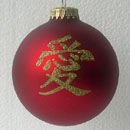 It was christmas yesterday, but as usual living in China I have not really celebrated it.
Christmas is of course not a public holiday in China (it's amazing how many Westeners still find this surprising when I tell them), since it is not a traditional Chinese holiday. However, in Chinese cities it has now become impossible not to notice when christmas is coming up. Although the level of excitment over christmas is not nearly as high as it is in the West, the Chinese are also increasingly aware of it, at least in big cities. Shops and restaurants often display signs saying "merry christmas" in English or in Chinese and christmas decorations, and I have seen some christmas trees in shopping malls and public places. I have also attended a couple of christmas shows held by a university department and a high school. I have even seen waiters in restaurants wearing santa claus hats. Of course, for most Chinese people in practice christmas doesn't mean very much, not least because it is a working day. Last year my Chinese teacher initially set an exam on christmas day, although after all the foreign students complained it was moved to the 26th (at that point some people tried to complain again, but luckily and quite rightly the teacher took no notice).
The Chinese name for christmas is 圣诞节 (shengdanjie), meaning the "holiday for the birth of the saint". Even so, I am doubtful that many Chinese even know what is actually being celebrated at christmas. The exception to this of course is the minority of Chinese christians. For most Chinese it is simply a Western holiday, and so it is considered of interest and worth imitating. In recent years the Chinese have become more and more aware of all Western (or at least Anglo-Saxon) festivals, from Hallowen to St. Valentine's day. The funniest thing is when Chinese friends wish me a happy thanksgiving day, not realizing that it is only an American holiday, and that people in Europe are hardly even aware of it. However, I am glad to see that the main holidays in China remain the traditional Chinese ones. The biggest Chinese festival, the real equivalent of what christmas is for the West, remains the Chinese New Year, and I hope it stays that way. It would be so boring if the whole world started celebrating the same holidays.
Sunday, December 20, 2009
What are the prospects for Chinese becoming an international language?

The "Beijing Center for the Promotion of Chinese overseas" has started a recruitment drive to find young Chinese volunteer teachers who could teach the Chinese language in other Asian countries. They will pick a total of 300 people in Beijing to join a total of 1000 to 1500 Chinese teachers who will go to countries like Thailand and the Phillipines to teach Chinese. In some Asian countries, like Thailand, teaching Chinese is now a compulsory part of primary education.
China's rise on the world stage has predictably given rise to a huge increase in interest for learning Chinese among non-Chinese people. Asian countries near China are the ones most affected by this phenomenon, although it is also present in the rest of the world. It was estimated by the Chinese minstry of Education that by 2010 there will be 100 million non-Chinese people learning the language of Confucius worldwide. The prime minister of Australia Kevin Rudd is proud of being able to speak fluent Chinese, and I am sure there will soon be other similar examples.
The Chinese government is clearly aware of how beneficial it will be for China if people around the world learn Chinese, and is doing its best to promote this. In 2004 it set up the Confucius Institute, a public organ whose aim is to promote the Chinese language and culture worldwide. It currently has set up 282 institutes in 88 countries. The government is also handing out scholarships to foreigners to come to China and study how to teach Chinese as a foreign language, with the aim that they will then go back to their countries and teach it.
The Chinese which is being learned around the world is of course 普通话 (Putonghua), known in English as Mandarin Chinese. This kind of Chinese, the official language of the People's Republic of China, is also gaining ground in the large Chinese communities in South-East Asia, which traditionally speak Southern Dialects of Chinese. In Singapore, whose people are mostly of Chinese origin, the government is actively promoting Mandarin at the expense of the other dialects, seeing it as the language of the future. And in Hong Kong, which when it was governed by Britain only used Cantonese Chinese, more and more people are learning Mandarin.
Of course, interest in learning a language tends to rise as the power of the country where it is spoken rises, and Chinese is no exception. The widely held perception in the rest of the world that China is on its way to become a superpower is what is fueling this sudden passion for learning Chinese. The real reason for the global dominance of English lies of course in the fact that it is spoken in the United States, although incredibly there are people who are genuinely convinced that English gained its current status as a lingua franca for being easy to learn. As a language becomes more widely learned, the country where it is spoken gains further advantages, being able to export its culture, music and films more easily, and increase its soft power. The Chinese government is clearly aware of this, and is doing its best to export its language. This is quite normal, and legitimate.
Is there any chance that in the future Chinese might replace English as a kind of global lingua franca? Personally I find it hard to believe that Chinese will ever come to be widely known by the general public in the West, although one never knows. Apart from anything, it is so much easier for speakers of European languages to learn English, or Spanish, or any other European language. What I could maybe see happening is Chinese becoming a kind of lingua franca for East Asia, which is where there is the most interest for learning Chinese. After all, English is not much easier to learn than Chinese for the average Korean or Cambodian, and in fact some other Asian languages (specifically Korean, Japanese and Vietnamese) have borrowed heavily from Chinese in the past, so part of the vocabulary is similar. Knowledge of English has never really become very widespread among the masses of East Asia, with the exception of the Philippines and maybe Malaysia and Singapore, which are former colonies of the USA or Britain.
But isn't the Chinese writing system too difficult for it to become widely known worldwide? The fact is that learning the Chinese alphabet is hard, but not as hard as many imagine. It is possible to learn to recognize the few thousand characters one needs to know to read an ordinary Chinese text within a couple of years if one lives in China, and even not living in China it is still not that prohibitive, especially starting as a child. Learning to write by hand is more difficult than just learning to read, but nowadays computers make writing by hand less of a necessity.
The Chinese which is being learned around the world is of course 普通话 (Putonghua), known in English as Mandarin Chinese. This kind of Chinese, the official language of the People's Republic of China, is also gaining ground in the large Chinese communities in South-East Asia, which traditionally speak Southern Dialects of Chinese. In Singapore, whose people are mostly of Chinese origin, the government is actively promoting Mandarin at the expense of the other dialects, seeing it as the language of the future. And in Hong Kong, which when it was governed by Britain only used Cantonese Chinese, more and more people are learning Mandarin.
Of course, interest in learning a language tends to rise as the power of the country where it is spoken rises, and Chinese is no exception. The widely held perception in the rest of the world that China is on its way to become a superpower is what is fueling this sudden passion for learning Chinese. The real reason for the global dominance of English lies of course in the fact that it is spoken in the United States, although incredibly there are people who are genuinely convinced that English gained its current status as a lingua franca for being easy to learn. As a language becomes more widely learned, the country where it is spoken gains further advantages, being able to export its culture, music and films more easily, and increase its soft power. The Chinese government is clearly aware of this, and is doing its best to export its language. This is quite normal, and legitimate.
Is there any chance that in the future Chinese might replace English as a kind of global lingua franca? Personally I find it hard to believe that Chinese will ever come to be widely known by the general public in the West, although one never knows. Apart from anything, it is so much easier for speakers of European languages to learn English, or Spanish, or any other European language. What I could maybe see happening is Chinese becoming a kind of lingua franca for East Asia, which is where there is the most interest for learning Chinese. After all, English is not much easier to learn than Chinese for the average Korean or Cambodian, and in fact some other Asian languages (specifically Korean, Japanese and Vietnamese) have borrowed heavily from Chinese in the past, so part of the vocabulary is similar. Knowledge of English has never really become very widespread among the masses of East Asia, with the exception of the Philippines and maybe Malaysia and Singapore, which are former colonies of the USA or Britain.
But isn't the Chinese writing system too difficult for it to become widely known worldwide? The fact is that learning the Chinese alphabet is hard, but not as hard as many imagine. It is possible to learn to recognize the few thousand characters one needs to know to read an ordinary Chinese text within a couple of years if one lives in China, and even not living in China it is still not that prohibitive, especially starting as a child. Learning to write by hand is more difficult than just learning to read, but nowadays computers make writing by hand less of a necessity.
Of course learning Chinese would be difficult, especially for school children who don't live in China, but then isn't learning English terribly difficult for Asians too? How many years do Chinese students struggle with English before gaining any kind of fluency? And how many of them never do? Add to that the extremely illogical nature of English spelling, which means that in a sense the spelling of every English word has to be learnt by heart, just like every Chinese character. Of course it's not the same, but it does mean that English children take longer to learn to write than any other children in Europe, and this hasn't stopped English from gaining its huge worldwide popularity.
Coming to spoken Chinese, I can only say that in my Beijing university I am already using my very bad spoken Chinese to communicate with some of the foreign students who come from places like Thailand or Kyrgizstan, who don't know English but have learnt Chinese. They use it to communicate with each other as well, and they seem to manage just fine, despite the general misuse or lack of tones.
The fact is that when a language has a powerful country and culture behind it, and it is perceived as useful or even necessary, then there will be people who will suddenly be able to learn it, no matter how difficult it is. Keeping this in mind, it's not impossible to imagine that one day even in the West knowledge of Chinese might become relatively widespread, at least among the elite.
The Taiwanese pop group S.H.E. have made a song in honour of the increasing international importance of their language. It's called 中国话 (Zhongguo Hua), and you can hear it here, although there are no English subtitles.
The fact is that when a language has a powerful country and culture behind it, and it is perceived as useful or even necessary, then there will be people who will suddenly be able to learn it, no matter how difficult it is. Keeping this in mind, it's not impossible to imagine that one day even in the West knowledge of Chinese might become relatively widespread, at least among the elite.
The Taiwanese pop group S.H.E. have made a song in honour of the increasing international importance of their language. It's called 中国话 (Zhongguo Hua), and you can hear it here, although there are no English subtitles.
Saturday, December 12, 2009
The lethal injection to replace the firing squad
The north-eastern province of Liaoning has become the first Chinese province to make lethal injections the standard way of executing criminals, rather than firing squads. The Higher People’s Court of the province stated on its website that “lethal injection can reduce the fear and suffering experienced by criminals. (…) It is a symbol of progress and civilization, and also serves to punish criminals”. This seems to be part of a general trend. It was reported in June that lethal injections will eventually become the only method of execution of criminals in China, completely replacing firing squads. The director of the Supreme People's Court was quoted as saying that this method for terminating a person's life is "cleaner, safer and more convenient", and also more humane. Even in this area China is obviously falling more in line with international standards, or at least with American ones.
Public executions of criminals have also pretty much ceased in the last few years, and the death penalty in general is being handed out less and less freely. Even so, it is clear that we are still a long way away from abolition. Serious crimes like murder are still most often punished by death. What's more, even very serious cases of corruption and other crimes not involving direct murder can be dealt with through the death penalty, including even drug dealing. This year, two executives from the Sanlu group were sentenced to death for their part in the melamine-tainted milk scandal which caused the death of at least six children. Just a few days ago, an official was executed for pocketing staggering amounts of Yuan illegally. To be fair, only the most severe cases of corruption are dealt with this way, the ones which in the United States might attract sentences of decades in prison. And after all, by now the Chinese application of the death penalty is in some ways more "civilized" than it is in the US. At least there aren't any public executions any longer, while in the US every execution is still public in some sense, since the relatives of the victim are invited to watch.
Personally I am dead against the death penalty (no pun intended). However, I realize that if I were Chinese I would probably be in favour. Most of the Chinese people I have asked about the issue seem to consider the death penalty a natural way of dealing with serious crime (having said that, I have encountered one or two exceptions). Many people are also clearly not aware that this penalty no longer exists in many other countries. A Chinese girl who I had a language exchange with a few years ago in my university in Britain was quite surprised when I told her that the death penalty no longer exists in the UK, even though she had lived there for a few years. A very intelligent Chinese student (now studying in Canada) who I discussed the issue with last year told me that since China has so many people, "extreme laws" are necessary to keep order. Invoking the huge population as a justification for pretty much any aspect of how China is organized seems to be common in Chinese thinking. Others claim that in traditional Chinese thinking, someone who takes a life should pay with their own life. At the same time, I would not make too much of cultural differences in explaining the persistence of the death penalty in China. After all, in England in the nineteenth century you could be hanged for far more petty crimes than the ones for which you can be executed in China today.
In any case, even though there is much that I like about China, this readiness to dispense with the lives of criminals is one aspect of the country I find quite unappealing, and I can only hope that it will go on becoming less and less common as international attitudes on such matters become more influential.
Public executions of criminals have also pretty much ceased in the last few years, and the death penalty in general is being handed out less and less freely. Even so, it is clear that we are still a long way away from abolition. Serious crimes like murder are still most often punished by death. What's more, even very serious cases of corruption and other crimes not involving direct murder can be dealt with through the death penalty, including even drug dealing. This year, two executives from the Sanlu group were sentenced to death for their part in the melamine-tainted milk scandal which caused the death of at least six children. Just a few days ago, an official was executed for pocketing staggering amounts of Yuan illegally. To be fair, only the most severe cases of corruption are dealt with this way, the ones which in the United States might attract sentences of decades in prison. And after all, by now the Chinese application of the death penalty is in some ways more "civilized" than it is in the US. At least there aren't any public executions any longer, while in the US every execution is still public in some sense, since the relatives of the victim are invited to watch.
Personally I am dead against the death penalty (no pun intended). However, I realize that if I were Chinese I would probably be in favour. Most of the Chinese people I have asked about the issue seem to consider the death penalty a natural way of dealing with serious crime (having said that, I have encountered one or two exceptions). Many people are also clearly not aware that this penalty no longer exists in many other countries. A Chinese girl who I had a language exchange with a few years ago in my university in Britain was quite surprised when I told her that the death penalty no longer exists in the UK, even though she had lived there for a few years. A very intelligent Chinese student (now studying in Canada) who I discussed the issue with last year told me that since China has so many people, "extreme laws" are necessary to keep order. Invoking the huge population as a justification for pretty much any aspect of how China is organized seems to be common in Chinese thinking. Others claim that in traditional Chinese thinking, someone who takes a life should pay with their own life. At the same time, I would not make too much of cultural differences in explaining the persistence of the death penalty in China. After all, in England in the nineteenth century you could be hanged for far more petty crimes than the ones for which you can be executed in China today.
In any case, even though there is much that I like about China, this readiness to dispense with the lives of criminals is one aspect of the country I find quite unappealing, and I can only hope that it will go on becoming less and less common as international attitudes on such matters become more influential.
Saturday, November 14, 2009
To have or not to have the Chinese Swine flu Vaccine?
Here in China, public worry about swine flu is about as high as everywhere else in the world. Even though for a long time the Chinese authorities quarantined anyone who was found to have a temperature on entering the country, in the end the flu was obviously not deterred by such measures and penetrated China, just like you would expect from a flu.
There are different figures about how many people have died of it, depending on how the deaths are recorded, but it seems that around 40-60 people have already died of the illness in China, with dozens of thousands being infected. Here in Beijing, there seem to be even more people walking around with little masks on their faces than there usuallly are. A few weeks ago, a university student in a Beijing university died of swine flu (not in my university, fortunately), and hundreds of other students turned out to be infected.
The Chinese health authorities have already managed to domestically produce millions of swine flu vaccines, and they plan to vaccinate 65 million people (or 5% of the population) by the end of the year. Up to now, over 12 million people have already been vaccinated. Beijing receives priority of course, and they are talking of offering the opportunity to be vaccinated to all the Beijing residents very soon (but will it really be all the residents, or only those with a Beijing Hukou?). It must be said that China is the first country to be able to produce so many copies of a swine flu vaccine, but many are uncertain about the safety of this Chinese-made vaccine. It does seem a bit suspicious that China has been able to produce millions of vaccines before any other country, and it maybe that the vaccine's safety standards are not of the best. Many people are refusing to have the vaccination because of concerns over its quality.
Personally, I was offered the opportunity to be vaccinated last friday, alongside all the other students in my college (all the university's students in Beijing are being offered the vaccine), however after thinking about it a lot I decided to decline the offer. There have been a few cases of people having anaphylactic shocks after being vaccinated, and I do seeem to have a slight predisposition towards allergies. The message which we were given a few days previously about the vaccination was not encouraging. It stated that one should not take the vaccination if one is allergic to a long list of things, including eggs and some chemicals I have never heard of, and that anyone which chronic diseases (or of course a cold or a flu) should not be vaccinated. Finally, it asked those who would be vaccinated to wait on the premises for half an hour "to make sure they are ok". I have taken vaccines in the past, and I have never been asked if I was allergic to anything beforehand. I have certainly never been asked to wait half an hour after the vaccination in case I felt ill.
The whole tone of the message made it feel like the health authorities are not too confident of their own vaccine's safety, and this pushed me towards deciding not to take it. The next day, the headline on China's only English daily was "two die after H1N1 vaccine", although on closer inspection it appears that one of the two people died 8 hours later of a heart attack, and it was probably just coincidence, while the other case is still being investigated, and no news is available at present. In any case, it does seem that there are serious concerns over the vaccine's safety, and I personally know various other students, both foreign and Chinese, who decided against taking it. The day after the vaccination, a message was passed on to the foreign students who had taken it asking them not to shower for one week! Although there is some idea that one should not shower for a while after a vaccination, I have never heard of not showering for a week. I suppose no one will take the advice too seriously. My roomate, who was vaccinated, has certainly already showered without dropping dead.
Personally I feel that the risk posed by the vaccine is probably tiny, but the risk posed by swine flu is also extremely small at present. After all, 40-60 people dying in a nation of one and a half billion is not a cause for panic, is it? And most of them probably had underlying health conditions anyway. However, if the swine flu gets more widespreadd and takes more lives, I may still change my mind and get vaccinated. Plus, if most of Beijing does get vaccinated, that would also protect me up to a point I suppose.
I am aware of the fact that if I was back in Britain or Italy, I would still not have the chance to be vaccinated. However, with their huge population and limited resources, the Chinese authorities are probably so keen on avoiding a pandemic that they would be quite prepared to start using a vaccine before all the necessary safety checks were made. Of course, vaccines are never completely safe, and new ones less than ever. In other countries, people are also debating whether getting vaccinated is a good idea, as I have discovered by looking through the internet. The issue is confusing, but the for the time being I have decided to wait and see....
There are different figures about how many people have died of it, depending on how the deaths are recorded, but it seems that around 40-60 people have already died of the illness in China, with dozens of thousands being infected. Here in Beijing, there seem to be even more people walking around with little masks on their faces than there usuallly are. A few weeks ago, a university student in a Beijing university died of swine flu (not in my university, fortunately), and hundreds of other students turned out to be infected.
The Chinese health authorities have already managed to domestically produce millions of swine flu vaccines, and they plan to vaccinate 65 million people (or 5% of the population) by the end of the year. Up to now, over 12 million people have already been vaccinated. Beijing receives priority of course, and they are talking of offering the opportunity to be vaccinated to all the Beijing residents very soon (but will it really be all the residents, or only those with a Beijing Hukou?). It must be said that China is the first country to be able to produce so many copies of a swine flu vaccine, but many are uncertain about the safety of this Chinese-made vaccine. It does seem a bit suspicious that China has been able to produce millions of vaccines before any other country, and it maybe that the vaccine's safety standards are not of the best. Many people are refusing to have the vaccination because of concerns over its quality.
Personally, I was offered the opportunity to be vaccinated last friday, alongside all the other students in my college (all the university's students in Beijing are being offered the vaccine), however after thinking about it a lot I decided to decline the offer. There have been a few cases of people having anaphylactic shocks after being vaccinated, and I do seeem to have a slight predisposition towards allergies. The message which we were given a few days previously about the vaccination was not encouraging. It stated that one should not take the vaccination if one is allergic to a long list of things, including eggs and some chemicals I have never heard of, and that anyone which chronic diseases (or of course a cold or a flu) should not be vaccinated. Finally, it asked those who would be vaccinated to wait on the premises for half an hour "to make sure they are ok". I have taken vaccines in the past, and I have never been asked if I was allergic to anything beforehand. I have certainly never been asked to wait half an hour after the vaccination in case I felt ill.
The whole tone of the message made it feel like the health authorities are not too confident of their own vaccine's safety, and this pushed me towards deciding not to take it. The next day, the headline on China's only English daily was "two die after H1N1 vaccine", although on closer inspection it appears that one of the two people died 8 hours later of a heart attack, and it was probably just coincidence, while the other case is still being investigated, and no news is available at present. In any case, it does seem that there are serious concerns over the vaccine's safety, and I personally know various other students, both foreign and Chinese, who decided against taking it. The day after the vaccination, a message was passed on to the foreign students who had taken it asking them not to shower for one week! Although there is some idea that one should not shower for a while after a vaccination, I have never heard of not showering for a week. I suppose no one will take the advice too seriously. My roomate, who was vaccinated, has certainly already showered without dropping dead.
Personally I feel that the risk posed by the vaccine is probably tiny, but the risk posed by swine flu is also extremely small at present. After all, 40-60 people dying in a nation of one and a half billion is not a cause for panic, is it? And most of them probably had underlying health conditions anyway. However, if the swine flu gets more widespreadd and takes more lives, I may still change my mind and get vaccinated. Plus, if most of Beijing does get vaccinated, that would also protect me up to a point I suppose.
I am aware of the fact that if I was back in Britain or Italy, I would still not have the chance to be vaccinated. However, with their huge population and limited resources, the Chinese authorities are probably so keen on avoiding a pandemic that they would be quite prepared to start using a vaccine before all the necessary safety checks were made. Of course, vaccines are never completely safe, and new ones less than ever. In other countries, people are also debating whether getting vaccinated is a good idea, as I have discovered by looking through the internet. The issue is confusing, but the for the time being I have decided to wait and see....
Tuesday, November 3, 2009
Who decides when it snows and when the heating comes on in China?

Beijing was graced by its first snowfall this year last sunday. It is very unusual for it to snow so early in Beijing. Infact, it was the earliest snowfall in 22 years. However, there is more to it than just a freak weather phenomenon. The Chinese authorities quite often seem to engage with attempts to modify the weather, especially by inducing or increasing rain artificially over Beijing and the north of China to alleviate drought, which is often a problem in this arid region. Sunday's snowfall was at least partly induced by seeding the clouds with 186 doses of silver iodine. According to some reports, the aim was just to make it rain, not snow, but a sudden cold front which descended on sunday made it snow heavily, disrupting the traffic and power grid and delaying many flights. The temperature did indeed drop very suddenly between saturday and sunday, going from 13 degrees to below freezing. The weather forecast had already been reporting that it would snow for several days, and so I wonder how many days in advance the clouds had been seeded, if they were not expecting to produce snow. Others claim that the effect of these weather manipulation techniques is exagerated, and that it is impossible to predict what the result will be.
Anyway, another problem here in Beijing was that in most places, including my dorm, the heating was still not turned on when the snow came and temperatures outside dropped below
zero. The thing is that in China, the heating system is centralized. In the North of China, defined as everywhere north of the Yangtze river (or everywhere blue in the picture above), buildings usually have central heating, however it is not turned on until a specific set date, which in Beijing is usually november the 15th. Although some well off people and some offices have their own private heating systems, most people have to wait until the 15th of november for the heating to come on (it is then turned off on march the 15th.) It is well known that the two weeks before the heating comes on and after it comes off are the most uncomfortable time. This year however, they have decided to turn the heating on early here in Beijing, due to the unseasonal cold. They finally turned the heating on in my dorm on monday, although we had already experienced some pretty chilly nights, and I was forced to buy myself an extra blanket. Today it's a bit warmer outside, and they've turned the heating off again.
In some northern regions which are technically in Siberia, the heating comes on earlier. However, in the whole of Southern China, that is South of the Yangtze, it doesn't come on at all. Although again some wealthy people may have private heating, the vast majority just don't have any. Although the winters in the South are much less cold than in the North, with the temperature rarely dropping below zero, it is still unpleasantly cold inside the houses sometimes, and people often keep their coats on even inside. When I visited the south of China during the last Spring festival, I got used to keeping my coat on inside the hotel room or house I was staying in, and getting undressed to have a shower was always unpleasant.
Subscribe to:
Posts (Atom)